
Qubad Talabani: We Will Invest in Our People
Kurdistan 12:09 PM - 2026-06-07.jpg) PUKMEDIA
PUKMEDIA
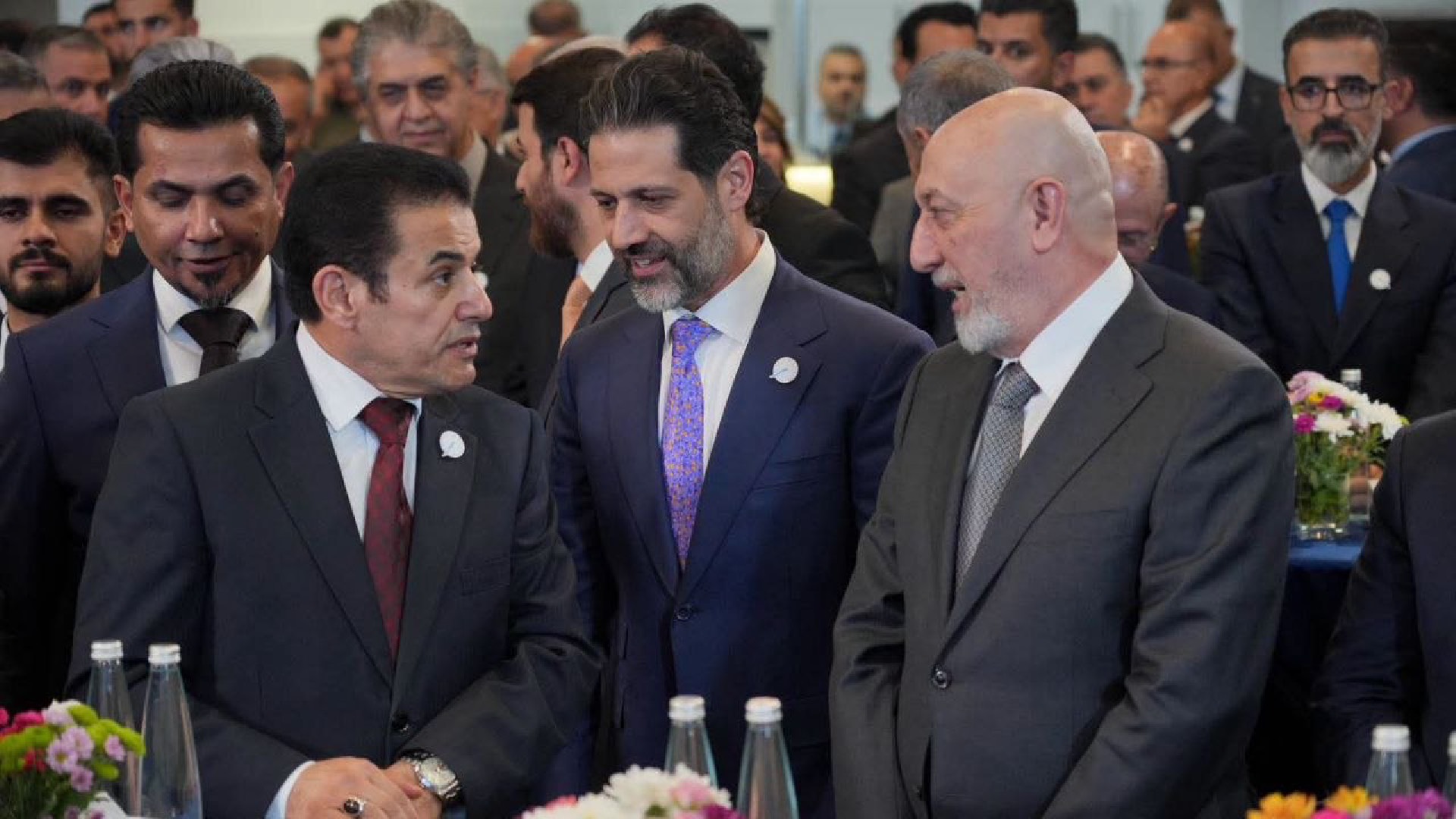
Qubad Talabani, Deputy Prime Minister of the Kurdistan Region.
Qubad Talabani, Deputy Prime Minister of the Kurdistan Region, deliverd a keynote speech at the 2nd Delphi Economic Forum in Sulaymaniyah, where he reaffirmed the need for economic diversification, regional cooperation, and political stability, warning that resilience is now “the test of serious leadership”, during a keynote address at the second Delphi Economic Forum in Sulaymaniyah.
The second day of the 2nd Delphi Economic Forum continued on Sunday in Sulaymaniyah, bringing together political leaders, diplomats, economists, and international participants to discuss regional and global developments.
The Deputy Prime Minister's speech said:
Distinguished guests, thank you for that introduction. Symeon, I love you, but this last one, maybe if I die, you can name something after me, but not now. Delphi is Delphi, let Delphi remain the Delphi Economic Forum, let it remain as Delphi.
But I want to thank you, Symeon, for your leadership, for your friendship, for all that you have done, for what you and your wonderful staff and your incredible team have done to create this network, to create this link, a link that has allowed us to bring Delphi to Slemani, to Kurdistan, and through Greece, through the beautiful city of Delphi, to reach the global stage.
He probably won't like me saying this, but I cannot not thank Kak Peshawa, Kak Peshawa Sewaili, in Slemani, who has been absolutely instrumental in organising all of this. He is too modest to say anything, but I want to thank you, Kak Peshawa, thank you for your persistence, for your support, for bringing Delphi from Delphi to Slemani.
Now, my speech.
Distinguished guests, excellencies, ladies and gentlemen, welcome again to Sulaymaniyah.
It is a privilege to welcome such a distinguished gathering of leaders, investors, thinkers, students, and partners from Kurdistan, from the Arab world, from Europe, from Greece, and from beyond.
Your presence here matters.
Too often, people speak about our region without speaking to those of us who live in it. That is why I’m especially pleased that Delphi is once again here in Sulaymaniyah.
From here, you do not only theorise about the region—you feel it. You understand its pressures more clearly, and you see its possibilities more honestly.
About a month ago, many of us were in Delphi, and we were reflecting on a world being reshaped by geopolitical instability, technological disruption, economic uncertainty, climate pressure, and the reordering of trade and energy routes.
Today, in Sulaymaniyah, that conversation continues. But here, these questions are not abstract. We live them. We govern through them. And we know that resilience is no longer optional. It is the test of serious leadership.
I believe that for the Kurdistan Region, resilience means more than just surviving shocks. It means building an economy that is broader, stronger, and less vulnerable. It means stronger institutions and... investing in people. And it means moving with confidence in a world that does not wait for hesitation.
That is why diversification is not a slogan for us. It is a strategic necessity.
Oil remains important, and it will remain important. But no economy secures its future by depending too heavily on one sector, especially in a region as volatile as ours.
The lesson is clear: stability requires diversity. Growth requires institutional strength. And long-term success requires investment in human capital.
That is the course we are committed to.
We are building the conditions for a stronger private sector. We are modernising public services. We are improving the business climate. And we are creating an economy in which entrepreneurs, investors, and young people can see real opportunity.
Women must be at the center of how we think about society, governance, and the economy.
No country can claim to be serious about progress while half its population remains underrepresented, underestimated, or excluded from opportunity.
When women are empowered, institutions become stronger, economies become more productive, and societies become more than just stable.
This is not only a question of rights, though it is certainly that. It is a question of national strength and long-term development.
And I have long believed that advancing women’s rights is not a side issue or a symbolic gesture, but core part of building a modern and confident society.
That work must continue not through slogans, but through real access, real representation, and real opportunity.
Dear guests,
I do not define success simply as growth. I define success as sustainable prosperity—prosperity that is more balanced, more productive, and more durable. And that prosperity must reach beyond a few sectors and beyond a few cities.
The future of Kurdistan will not be built by oil alone, and it will not be built from its capital, Erbil, alone. And it will not be built if rural communities and smaller districts are left behind. That is why I strongly believe in regional and rural development.
Different parts of Kurdistan have different strengths, and good leadership must recognise that, and good leadership must invest accordingly. That is why this agenda includes agriculture, tourism, manufacturing, technology, renewable energy, and the creative sector.
That is why it includes regional and rural development. That is why it must bring opportunity closer to people, not simply ask people to chase opportunity. That is how we strengthen the social contract. That is how we reduce inequality between regions. And that is how we build a more resilient economy. Sulaymaniyah has a central role in that future.
This city has always stood for more than commerce alone. It has been a center of culture, ideas, education, literature, and public life. It has shaped how Kurdistan thinks. I believe it can help shape how Kurdistan grows. Sulaymaniyah has another role.
From here, we have often played the role of connector, de-escalator, and mediator. That is not a small role in our region. It is an essential role.
In a region shaped for too long by confrontation, mistrust, and at times miscalculation, places that connect, calm, and mediate have real strategic value. And I believe Sulaymaniyah has played that role, and we will continue to play that role.
And I believe that Kurdistan can help widen the space for dialogue while others are trying to narrow it. This matters especially now.
Iraq has a new government, and that creates a moment of opportunity—a chance to shape a more stable, more productive, more confident, and more independent Iraq.
I believe Iraq has a real chance to succeed. It has the human capital. It has the natural resources. It has the strategic location. And it is developing the makings of a real cross-sectarian, cross-ethnic, multi-religious governing coalition. So Iraq has the regional significance and the potential to become stronger in the years ahead.
And I believe just as strongly that the success of the Kurdistan Region and the success of Iraq are connected. These are not competing futures. They are linked futures. The Kurdistan Region must be part of Iraq’s success story—not at the margins of it, and not as a reluctant participant, but as an active partner in building a more prosperous, more connected, and more resilient country.
That also means helping shape an Iraq that is strategically balanced. I believe Iraq should not see its future through only one direction. Iraq can look east and west with confidence.
It can value its relationship and proximity with Iran while also investing seriously in its relationship with the United States. It can work with Europe, with Russia, and with our brothers and sisters in Türkiye. It can protect its sovereignty, deepen its regional ties, and broaden its international partnerships all at the same time. That is not a contradiction. It is mature statecraft. And it is the kind of statecraft Iraq needs right now, and the kind we are helping to shape.
When Baghdad and Erbil resolve issues seriously and constructively, that does not only benefit Kurdistan. It benefits Iraq. It creates confidence. It creates predictability. And it creates more space for investment, for reform, and for growth. So I stand by this principle: "The relationship between Baghdad and Erbil must be approached in the spirit of shared success, not zero-sum thinking."
We also have to be honest about the cost of prolonged conflict, and even the cost of a prolonged unresolved status quo.
When tensions between Iran and the United States deepen, Iraq does not remain untouched. The wider region does not remain untouched. Trade suffers. Confidence suffers. Investment suffers. And ordinary people pay the price for instability and for the turbulence.
We have had too many wars, so it is time to give peace a chance. This is not a naïve statement. It is a global imperative. Peace creates room for growth. Peace creates confidence. Peace creates room for serious state-building.
And that is why the roles of the connector, the de-escalator, and the mediator are not secondary roles in this region. They are essential roles.
None of this will happen in isolation. That is why platforms like Delphi matter. They matter because they bring together leaders, institutions, and ideas at a time when all three are needed.
Our partnerships with Europe, with the United States, with regions, and with friends around the world matter because they bring more than just capital.
They bring knowledge. They bring credibility. They bring institutional strength. And they bring long-term cooperation. They bring friendship. The President of the PUK yesterday said that personal relationships matter.
In a period marked by volatility, trusted partnerships become even more valuable. I understand that Kurdistan has a real opportunity in this changing region. We stand at the intersection of markets, energy routes, human capital, and regional connectivity.
We will not watch these changes pass by us. We will help shape them, because we want to be a serious economic partner for Europe and for the rest of the world.
Ladies and gentlemen,
This is a moment of uncertainty, but it is also a moment of opportunity.
And I believe the Kurdistan Region can emerge stronger from this period. I believe Iraq can emerge stronger from this period. And I believe our responsibility is to help make that success real.
We will build resilience through diversification. We will strengthen infrastructure. We will invest in our people. We will support innovation.
And we will work to ensure that opportunity reaches every region, not just a few. And that is the future I believe in. That is the future we are committed to.
And that is the spirit that must carry us from Delphi to Sulaymaniyah and beyond—not merely to discuss the region, but to speak from it, to understand it, and to help lead it.
Thank you very much for your attendance.
PUKMEDIA
.jpg)
.jpg)
.jpg)
More news
-
Kurdistan Region VP Attends French National Day Celebration
10:43 PM - 2026-07-14 -
President Amedi: Jalal Talabani’s Legacy Will Continue to Inspire Future Generations
10:17 PM - 2026-07-14 -
China Does Not Seek a 'Sphere of Influence' in Relations with Pacific Island Nations, Foreign Minister Says
12:27 PM - 2026-07-14 -
Oil Climbs to One-Month High as U.S. and Iran Intensify Attacks in the Strait of Hormuz
09:05 AM - 2026-07-14
see more
Kurdistan 10:28 PM - 2026-07-14 Qubad Talabani Welcomes Renaming of Sulaymaniyah Airport in Honour of Mam Jalal
Trump Welcomes Iraqi PM al-Zaidi to White House, Reaffirms Strong US-Iraq Partnership
09:02 PM - 2026-07-14
Sulaymaniyah International Airport Officially Renamed Jalal Talabani International Airport
07:20 PM - 2026-07-14
.jpeg)
Qubad Talabani Reviews Progress on Major Water Project to End Shortages in Chamchamal
02:36 PM - 2026-07-14
Most read
-
Remembering 14 July Revolution That Ended Iraq's Monarchy
Iraq 11:11 AM - 2026-07-14 -
Iraqi PM Discussed Bilateral Cooperation and Regional Stability with U.S. Special Envoy in Washington
Iraq 10:01 AM - 2026-07-14 -
Trump Says U.S. Has Reinstated Blockade on Iranian Shipping in Hormuz
World 09:05 PM - 2026-07-13 -
Houthis Launch Missile Attacks on Saudi Arabia After Years of Calm
World 09:45 AM - 2026-07-14 -
China Does Not Seek a 'Sphere of Influence' in Relations with Pacific Island Nations, Foreign Minister Says
World 12:27 PM - 2026-07-14 -
Trump Welcomes Iraqi PM al-Zaidi to White House, Reaffirms Strong US-Iraq Partnership
Iraq 09:02 PM - 2026-07-14 -
Oil Climbs to One-Month High as U.S. and Iran Intensify Attacks in the Strait of Hormuz
News 09:05 AM - 2026-07-14 -
Ukraine to Manufacture French Missiles and Order Warplanes, Macron Says
World 11:22 PM - 2026-07-13
The News in your pocket
Download
 Application