
Qubad Talabani at Delphi: We Want to Open Kurdistan Up to the Rest of the World
Kurdistan 12:41 PM - 2026-04-25.jpg) Deputy PM's Media Office
Deputy PM's Media Office
Qubad Talabani, Deputy Prime Minister of the Kurdistan Region, speaking at Delphi Economic Forum in Greece, 24 April 2025.
Qubad Talabani, Deputy Prime Minister of the Kurdistan
Regional Government, addressed the Delphi Economic Forum, highlighting
Kurdistan’s evolving political and economic role as well as its regional
aspirations for development and peace, stating that they want to open Kurdistan
to the wider world not only through politics but also through serious
discussions on development, the regional economy, and the historical and
contemporary contributions of the Kurdish people, while encouraging a move
beyond entrenched stereotypes.
Opening his remarks, Talabani expressed appreciation to the
organisers and recalled the Delphi Economic Forum Sulaymaniyah, saying: “I
wanted to thank everybody involved with Delphi for hosting the first ever
Delphi Economic Forum in Sulaymaniyah. It was a great success. We had many
speakers attend and we look forward to hosting the second one in June.”
Confirming the upcoming edition in Sulaymaniyah, he added:
“So this is a plug for the Delfi Economic Forum in Sulaymaniyah 2. We look
forward to having you and hosting you there. And there we can also talk more
about who the Kurds are.”
Reflecting on Kurdish identity and regional geography, he
said: “Right now we are in the epicenter of many issues. As Iraqi Kurds, we are
stationed between Iran, Türkiye, Syria and the rest of Iraq which is as you're
all following the news been quite active lately.”
Rejecting long-held stereotypes, Talabani stressed: “We do
get labeled tough fighters and we have put up a good fight over the last
several decades but we are more than just the fighters.”
He explained that the Kurdish leadership is pursuing broader
engagement: “We are engaging on strategic levels, politically, economically,
through diplomacy channels, through back channels, on many fronts, but all
towards one objective, stability, prosperity, development, moving away from war
and conflict and instability and tension.”
However, he acknowledged regional constraints, noting:
“We're trying, but geography isn't helping us on this mission.”
On regional conflicts and their impact, Talabani said: “The
war has affected us significantly being so close to us and being between two
entities that we have deep ties and relations with, it has affected us
economically. It has affected us from a security perspective, but is also
affecting us psychologically as a people, who are part of a country that has
lived through many, many wars.”
Despite this, he emphasised diplomatic engagement: “We are
not just sitting idly by. We're doing whatever we can to ensure that the
dialogue continues between the United States and Iran and that we welcome this
ceasefire.”
He expressed hope for long-term peace, stating: “We're
hopeful that this ceasefire will create the climate and the space necessary for
there to be a lasting deal that will finally bring peace and prosperity to us.”
Reaffirming Kurdistan’s neutrality in regional conflicts, he
said: “We have said from day one, we are not part of this war. We do not want
to be part of this war and we will not become part of this war.”
He added: “We will do everything we can to protect our
citizens, to protect Kurdistan, to protect the stability of the Kurdistan
Region, and what we have built over many many years.”
Positioning Kurdistan as a mediator, he stated: “We are
willing to be a bridge not a battlefield and we have deconflicted on many
instances over the past 2 months and will continue to play a positive role to
that effect.”
Turning to broader regional Kurdish dynamics, Talabani
highlighted developments in Türkiye and Syria, saying: “Look, this the
landscape in the Middle East is shifting. It's constantly shifting. But one
thing is constant. There are a group of people called the courts. We're in
Iran. We're in Türkiye. We're in Syria. And we are in Iraq. There is a peace
process ongoing now in Türkiye by the government of Türkiye. The opposition
parties in Türkiye, the parliament in Türkiye, and majority of the political factions
are supporting a process which has ended a 40-year war between Türkiye and the
PKK.”
He described this as a positive shift: “This is a positive
development. We support this development and will work to make sure this is
delivered.”
On Syria, he said: “We would like to see the Kurds of Syria
integrated fully into the society, into the government, into the economy, into
the security services of Syria.”
He stressed their role in regional security: “The Kurds of
Syria have been at the forefront of the fight against terrorism. They've fought
side by side with the United States and other international partners in
fighting ISIS.”
Talabani said their contribution should be recognised
politically: “And the reward for that bravery should not be isolation and
should not be exclusion from the state. On the contrary, the reward for that
state for that role should be having a leading role and a seat at the
decision-m table in Damascus.”
Reflecting on Kurdish progress over decades, he said: “I
think when you looked at if you looked at the Kurds 30 years ago, we were a
victimised community and then maybe others may have defined us as a problem, as
a nuisance. But today we're none of those. We've moved beyond the sense of
victimisation of the past. We are focusing on economic development.”
He added: “We're focusing on being a bridge, supporting a
peace process between Türkiye and the PKK, supporting the integration of Kurds
of Syria into the new Syrian Republic. I would like to say that we were helpful
in preventing the Kurds of Iran from being significantly hurt in this conflict
with between the United States and Iran.”
He also highlighted the Kurds’ role in Iraq and said: “And
at the same time, we're playing a pivotal role in standing up the new
government in Iraq. A government that will respect its constitution, adhere to
the principles of federalism, and ensure the policies of the country, serve all
of the people of the country, but also puts Iraq on the right footing, which I
think it can be.”
Addressing the economy, he noted oil dependency: “Oil is
essential for Iraq's economy which is why when the Straits of Hormuz is closed
the economy of Iraq is severely damaged as well as Kurdistan's. While we would
all love to get away from oil, we keep talking about it, get away from oil, the
reality is we're not getting away from oil.”
However, he outlined diversification plans: “But what we
want to do is use oil as a source of revenue to support other sectors,
agriculture, tourism, agro-industries, agro-tourism, many other uh industrial
areas where it has huge potential for growth.”
On Kurdistan’s gas resources, he said: “Kurdistan is
gas-rich and Sulaymaniyah is very gas-rich.”
He described a long-term energy strategy: “For us, the
strategy here is to power our local economy, power our electricity sector,
power our industrial growth. And our strategy has been from day one
transferring gas to wire. We think we have enough, we know we have enough gas
to become a net exporter of power whether it's to serve the deficiencies in the
rest of the country or the region that we are living in. This is our strategy
and we are working steadfast to implement that. It's complicated but simple.
The complication is we're a subs sovereign within a country which is constantly
in transition. But the strategy is simple.”
On moving away from energy and utilising other resources,
such as agriculture and trade, he said: “We have the most fertile land in the
region which makes us very conducive for agricultural development, for
agricultural growth, for development of agro-industries, not just to serve
Kurdistan, but to serve the whole country, not just to serve Iraq, but to
actually be an exporter of food stuffs, of vegetables, of fruits. ”
He added: “Greece is very famous for its olives. Our olives
are pretty good, too. Maybe not as good as Greece's, but they're pretty good,
too. But our pomegranates are very good. Our honey is very good. Our walnuts
very good. We have many products, figs, many products that we have been lucky
to taste in Kurdistan that with the right kind of investment, with the right
kind of strategy, the right kind of partnerships like the ones we're building
here in Greece, Kurdish products could be making the international markets very
soon.”
Looking ahead, Talabani said Kurdistan is entering a new
phase: “So since 2003 since um the liberation of Iraq and we still call it the
liberation of Iraq because for us we were victims of Saddam's brutality. Since
then, we have been building our economy. We have been building our
infrastructure. But now we're entering we're entering a new era. We feel for
the first time in a long time that we have a strategy. We know where we want to
go.”
He stressed partnerships as key: “We know how we want to do
this. It's just about the partnerships now. It's about building the right kind
of partnerships, breaking out from the internal Kurdish dimension, building
partnerships with countries like Greece, with other European countries, with
the United States, and with regional powers to reach our potential. And I think
now we're at a point where our public expects more from us because for years,
we've been talking about potential. We can't just be a potential. We have to be
the real deal. And that just requires moving beyond the rhetoric and actually
getting things done.”
On governance and reform, he added: “We focused a lot on um
entrepreneurship on innovation on supporting youth on introducing AI into our
governance in in training a new cadre of youth on development. But really
touching back on your previous question, we've spent so much of our time
building up the major cities of Kurdistan, Erbil, Duhok, Sulaymaniyah.”
He also highlighted how the Kurdistan Region is looking to
develop rural areas, stating: “We're now looking at rural development. How can
we go beyond the big cities? You've been to Sulaymaniyah, you've been to Erbil,
you should go to Duhok as well. I know many in the audience have been. And
you've seen we've seen the development in the big cities but now we want to
move beyond the big cities. We want to move to the districts to the
sub-districts because I think that's where the key to unlocking Kurdistan's
real potential is that's where the agricultural land is.”
He added: “That's where the industrial growth can happen.
That's where a population which has not had access to maybe the latest
technologies or the latest educational methods with the right kind of inputs
could really exponentially grow Kurdistan's economy and then that economy is
not isolated. You know we are not on an island. Sometimes we wish we were, but
the fact that we're not on an island means we have to make use of the
relationships we have on the countries that are bordering us.”
He also underlined that the Kurdistan Region can fill the
gaps existing in the region, stating: “We have a competitive advantage in
certain areas. We may be able to fill the gaps that may exist in Iran, that may
exist in Türkiye, that may exist in Syria, that certainly exist in the rest of
the country. And that's how we're positioning ourselves. We don't want to be a
problem. We're not a threat to anyone's sovereignty. We're not a threat to
anyone's territorial integrity. We're not a threat to anyone's um security.
We're an asset and I think personally I would say an asset that is
underutilised.”
Speaking about the Middle East and the world perceives it,
Talabani said: “You've had so many conversations about the war in Iran at this
very forum and with all due respect to many of the speakers that have spoken
about it, but very few know Iran better than we do. Right? And I think this is
an opportunity for countries around the world that that are interested in the
Middle East. Come talk to us. Don't talk about us. I hear a lot of times being
spoken about sometimes positively, which is nice, sometimes not so positively,
which is normal. But come and talk to us because we can tell you what the
Middle East is really like, what the Middle East has become. It is not the
Middle East of the 70s and the 80s. It is a very different dynamic and after
this war it will look even more different than it did a year ago. And we're
here. We're free to talk to and we're ready to talk to anyone who's
interested.”
Talabani also called on Greece to play a role in the peace
process and supporting a deal between the United States and Iran, stating: “I
would say I think there's a two-way street here. I think we can benefit each
other and support each other. I know that Greece through its very dynamic
government is interested in engaging beyond its borders. Sometimes being part
of this giant entity called Europe can be slow, can be um obstructive. But I
know that the government in Greece is interested in engaging more, playing a
more productive role, potentially supporting this peace process, potentially
supporting a deal between the United States and Iran.”
Underlining Greece's development and how the Kurdistan
Region can benefit from it, Talabani said: “There's a lot that we can learn
from Greece's development. How Greece has been able to manage its economic
crisis, how it was able to come out of the ruins of its crisis and where it is
today economically is phenomenal. It's something Greeks should be proud of.
We're certainly looking at it as a model of success. What Greece is doing in
its digital transformation. I've met with your minister of um the digital governance
and AI. I've met with the Minister of Health and other ministries who all are
showing pride in their use of technology and their digitisation to improve
services to improve transparency.”
He added: “We're doing this too in Kurdistan by the way.
Maybe not as fast as Greece has been able to, but we are in the process of
digitising our government services, making services more transparent, making
them less bureaucratic. So, I think we can learn from your model. You can
utilise our assets in the region, our ability to speak to east and to west. And
I think there's a lot economically that could improve, especially now that
Aegean is flying to the Kurdistan Region. We're hoping for more flights. More
flights mean more tourists. More tourists possibly mean more investors, which
means stronger partnerships and stronger friendships.”
Speaking about holding Delphi Forum in Sulaymaniyah for the
second time, Talabani said: “Yes, I think it's the we have many of these forums
in Kurdistan but this was the first time that there was an international forum
in the Kurdistan region that has a name, a reputation, reputable name
associated with it. I think it was a great success. I'm hoping and expecting
the next one to be a bigger success.”
He concluded by stating: “So we want to open Kurdistan up to
the rest of the world, not just through politics, but to have serious
discussions about regional development, about regional economy, about the
contributions of Kurds historically and today, and vice versa, getting people
to go beyond this stereotype of the courts, you know.”
PUKMEDIA
More news
-
China Does Not Seek a 'Sphere of Influence' in Relations with Pacific Island Nations, Foreign Minister Says
12:27 PM - 2026-07-14 -
Oil Climbs to One-Month High as U.S. and Iran Intensify Attacks in the Strait of Hormuz
09:05 AM - 2026-07-14 -
Ukraine to Manufacture French Missiles and Order Warplanes, Macron Says
11:22 PM - 2026-07-13 -
Wildfire Erupts Near Paris as Heatwave Sweeps Across Europe
10:13 PM - 2026-07-13
see more
.jpeg)
Kurdistan 02:36 PM - 2026-07-14 Qubad Talabani Reviews Progress on Major Water Project to End Shortages in Chamchamal
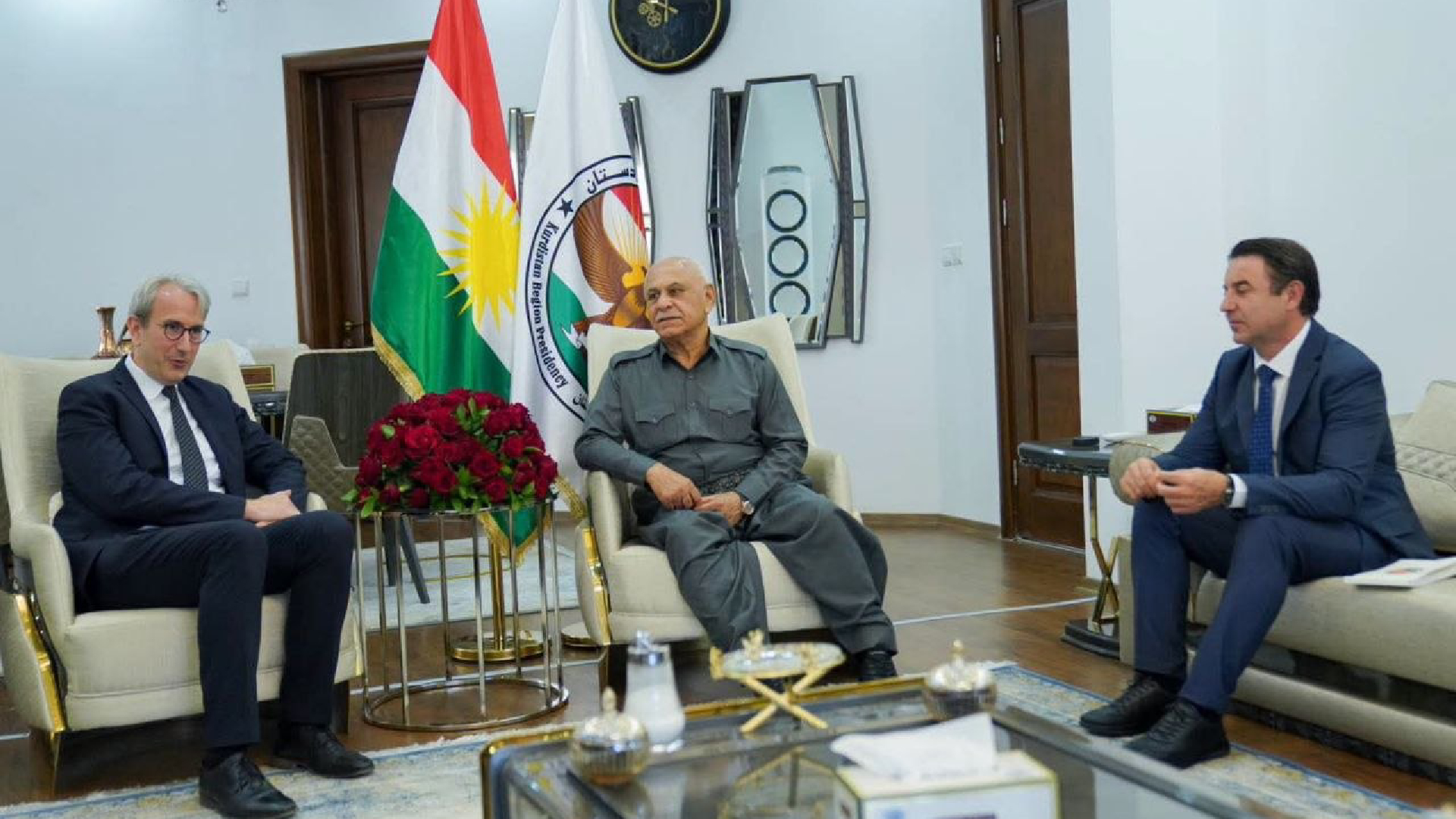
Kurdistan Region VP Commends Germany's Continued Support for Iraq and the Kurdistan Region
01:25 PM - 2026-07-14
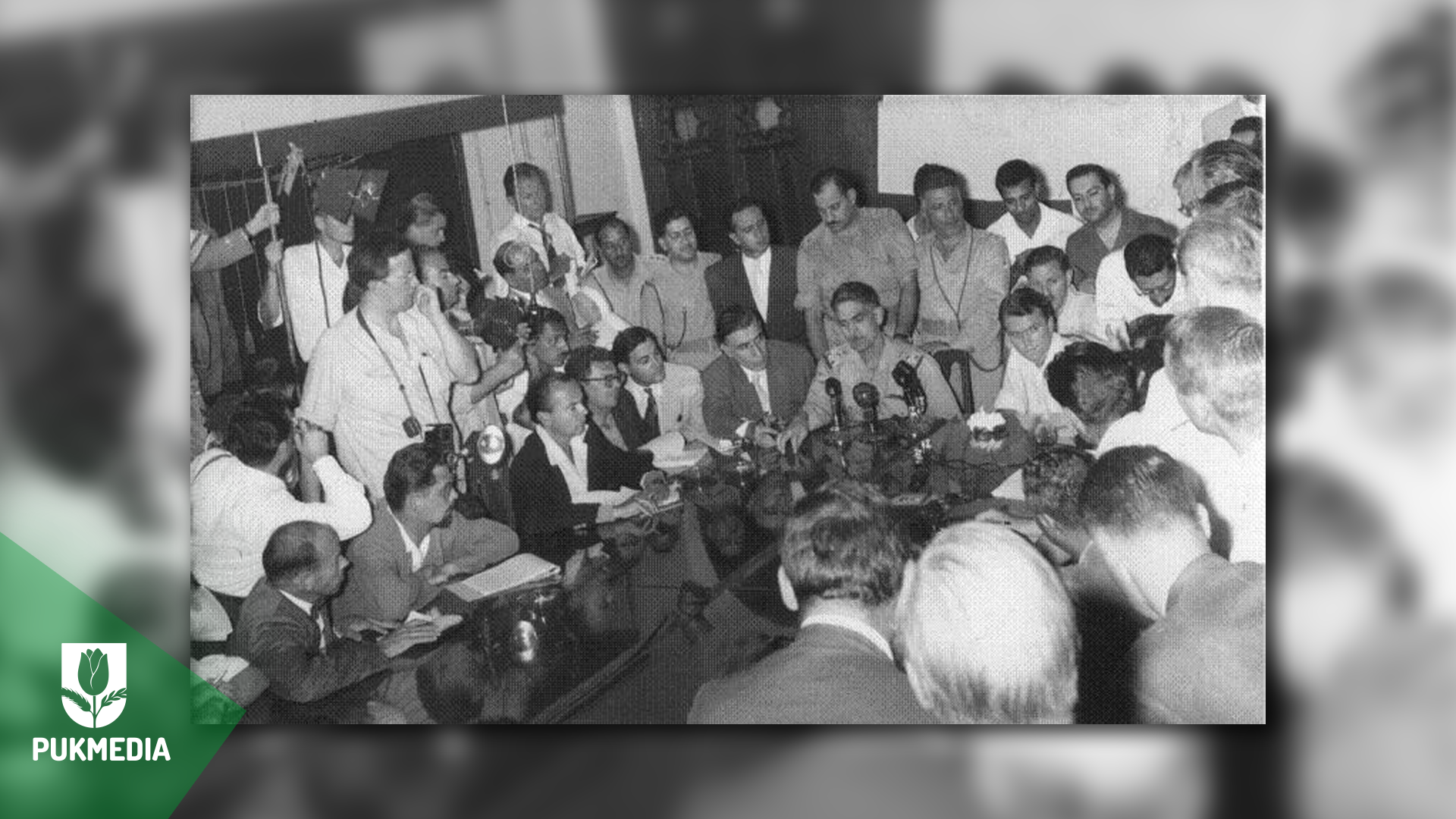
Remembering 14 July Revolution That Ended Iraq's Monarchy
11:11 AM - 2026-07-14
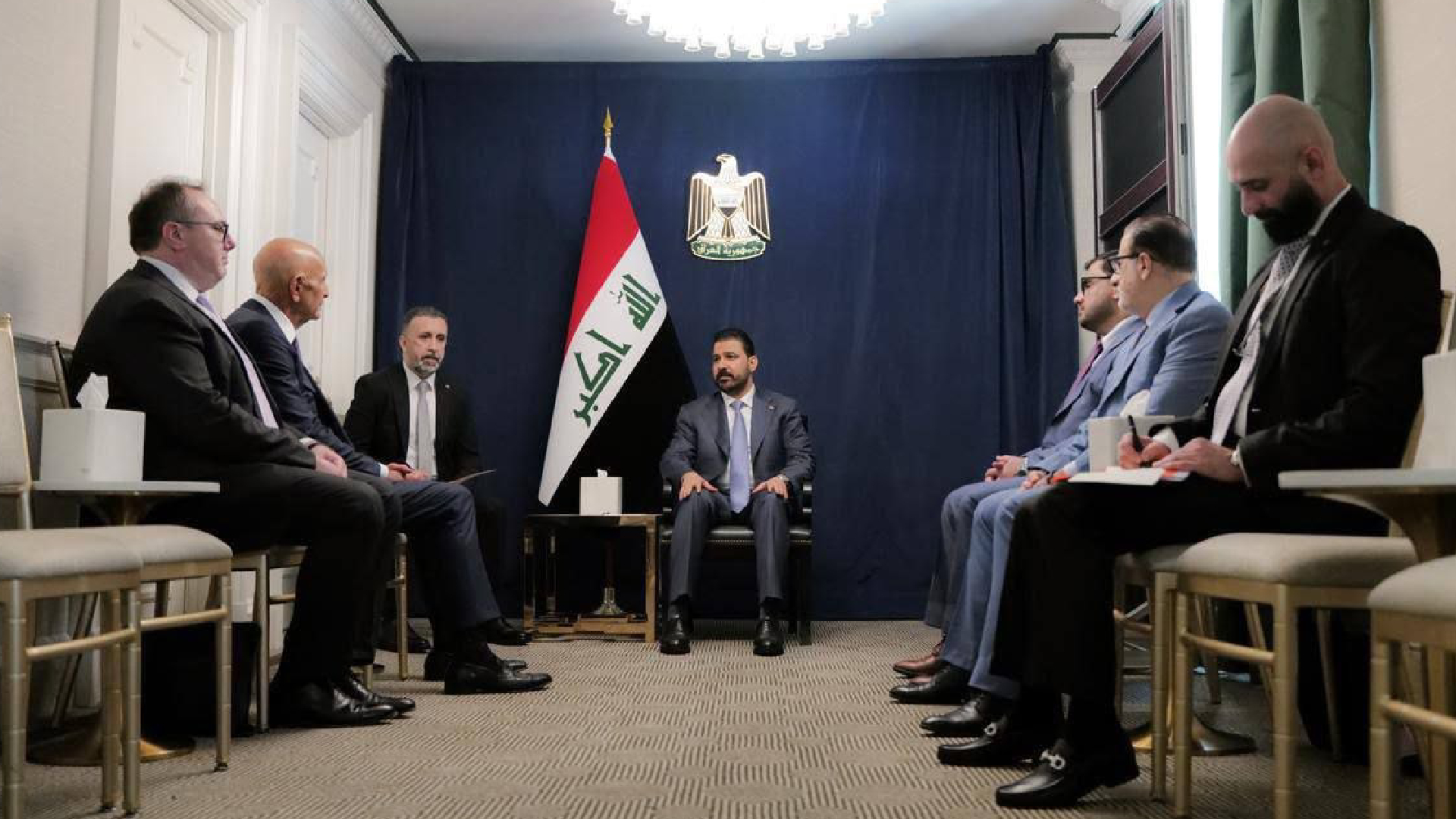
Iraqi PM Discussed Bilateral Cooperation and Regional Stability with U.S. Special Envoy in Washington
10:01 AM - 2026-07-14
Houthis Launch Missile Attacks on Saudi Arabia After Years of Calm
09:45 AM - 2026-07-14
Most read
-
Qubad Talabani Meets Dutch Ambassador to Iraq on Conclusion of Her Mission
Kurdistan 07:36 PM - 2026-07-13 -
Nineveh Integrity Court Orders Seizure of Commercial Properties and Mills Linked to Corruption Case
Iraq 03:42 PM - 2026-07-13 -
Sheikh Jaafar Sheikh Mustafa Receives Qubad Talabani
Kurdistan 05:36 PM - 2026-07-13 -
Hungary's Parliament Set to Vote on Constitutional Amendment to Oust President
World 02:21 PM - 2026-07-13 -
Trump Says U.S. Has Reinstated Blockade on Iranian Shipping in Hormuz
World 09:05 PM - 2026-07-13 -
Trump Says U.S. Would Probably Control the Strait of Hormuz and Charge for Its Use
World 04:25 PM - 2026-07-13 -
Ukraine to Manufacture French Missiles and Order Warplanes, Macron Says
World 11:22 PM - 2026-07-13 -
Qubad Talabani Applauds Women's Union's Drive to Modernise
Kurdistan 05:05 PM - 2026-07-13
The News in your pocket
Download
 Application