
Iraqi Parliament Reviews Oil Export Crisis Amid Ongoing Disruptions
Kurdistan 09:48 AM - 2026-03-18 The parliament’s media office
Iraqi parliament hall.
The Iraqi Parliament convened its fourteenth session on Tuesday evening, attended by 196 members, to address mounting challenges facing the country’s oil exports. The session hosted the Minister of Oil, alongside senior officials from the ministry, following a formal request submitted by 110 MPs.
Discussions centred on the suspension and disruption of oil exports, particularly through the Turkish port of Ceyhan and other outlets. The meeting was attended by the Deputy Prime Minister and Minister of Oil, undersecretaries for extraction and distribution, and senior executives from the State Oil Marketing Organisation (SOMO) and the Oil Products Distribution Company.
The Speaker of Parliament underscored the urgency of the situation, stressing the need for both the government and legislature to fulfil their responsibilities amid what he described as exceptional national circumstances. He sought clarity on the obstacles hindering exports, potential alternatives available to the ministry, and plans to sustain flows via the Kirkuk–Ceyhan pipeline.
Oil Minister Hayyan Abdul Ghani provided a detailed overview of production and export figures, noting that output had stood at 4.2 million barrels per day prior to recent tensions, before falling to 3.4 million barrels per day following OPEC-imposed cuts. He added that volumes have fluctuated due to tanker availability and adverse weather conditions.
The minister revealed that exports declined sharply following military developments in the Gulf, as shipping companies became increasingly reluctant to transport Iraqi crude. Insurance constraints and security risks have further complicated operations, with one tanker reportedly targeted while carrying Iraqi fuel oil.
As a result, crude exports have been fully suspended since 8 March, with current production largely redirected towards domestic refineries. The minister noted that refinery supply has increased by approximately 500,000 barrels per day, bringing total intake to 1.2 million barrels daily. This has enabled Iraq to achieve near self-sufficiency in petroleum products, with the exception of petrol. Work is ongoing, he added, on a Japanese-financed project to produce high-octane fuel.
In an effort to restore export capacity, the minister confirmed that an agreement had been reached with the Kurdistan Regional Government to resume exports via Ceyhan, with flows expected to begin at 10:00 AM the following day at a rate of 160,000 to 200,000 barrels per day.
He also highlighted the need for financial support to complete the 670-kilometre Basra–Haditha pipeline, which includes branches towards Syria and Fishkhabur, with total costs estimated at over $4 billion.
The Director General of SOMO affirmed the company’s readiness to resume pumping through the Kurdistan pipeline to Ceyhan. He added that alternative export routes were being explored, including overland transport to Syrian ports such as Banias and Tartus, as well as to Jordan’s Aqaba port. However, he acknowledged that these measures would not fully offset previous export volumes.
Parliamentarians, in their interventions, called for accelerated completion and repair of key pipelines, including the route to Aqaba, and urged greater coordination between the federal government and the Kurdistan Region. They also emphasised the need to maximise financial resources, expedite exports, and develop a comprehensive strategic plan for the sector.
Several MPs advocated for the implementation of the ASYCUDA customs system, citing its potential to improve economic conditions, and proposed the formation of a temporary parliamentary committee to regulate relations between Baghdad and the Kurdistan Region.
The Speaker expressed appreciation for the position taken by Kurdish blocs in supporting exports through Ceyhan, and confirmed ongoing coordination with the Prime Minister to expand the ASYCUDA system nationwide, including in the Kurdistan Region. He also stressed that Parliament would not permit any infringement on the salaries of public employees in the region.
Furthermore, he called for dialogue between the federal Oil Ministry and the Kurdistan Region’s Ministry of Natural Resources to address discrepancies in fuel pricing, particularly the higher cost of petrol in the region. He also highlighted the importance of including direct salary transfers to the Kurdistan Region within the 2026 federal budget.
At the conclusion of the session, Parliament adopted a series of resolutions, including obliging the federal government to establish alternative outlets for crude oil sales to mitigate economic risks, assert control over all aspects of oil production and distribution, and implement the ASYCUDA system across all governorates.
Lawmakers also stressed the urgency of passing a long-delayed oil and gas law, ensuring fuel supply to both public and private sectors, rehabilitating key export pipelines, and guaranteeing the payment of salaries to Kurdistan Region employees on an equal basis with the rest of Iraq.
PUKMEDIA
More news
-
Oil Prices Fall for Third Straight Day as Hormuz Shipping Recovers
10:50 AM - 2026-06-24 -
Qubad Talabani Discusses Tourism Development Strategy in Meeting with Tourism Board
06:27 PM - 2026-06-23 -
Iraq Increases Kirkuk Oil Exports to 7 Million Barrels a Month, Says SOMO
03:37 PM - 2026-06-23 -
Vance Says Talks with Iranian Officials Laid ‘Good Foundation’ for Deal to End War
01:06 PM - 2026-06-23
see more
Kurdistan 04:00 PM - 2026-06-24 PUK President, KJG Leader Discuss Unified Efforts to Resolve Outstanding Issues

Teen Author and Translator Pursues Multilingual Success
01:24 PM - 2026-06-24
.jpg)
International Day of Women in Diplomacy Celebrated Worldwide
09:27 AM - 2026-06-24
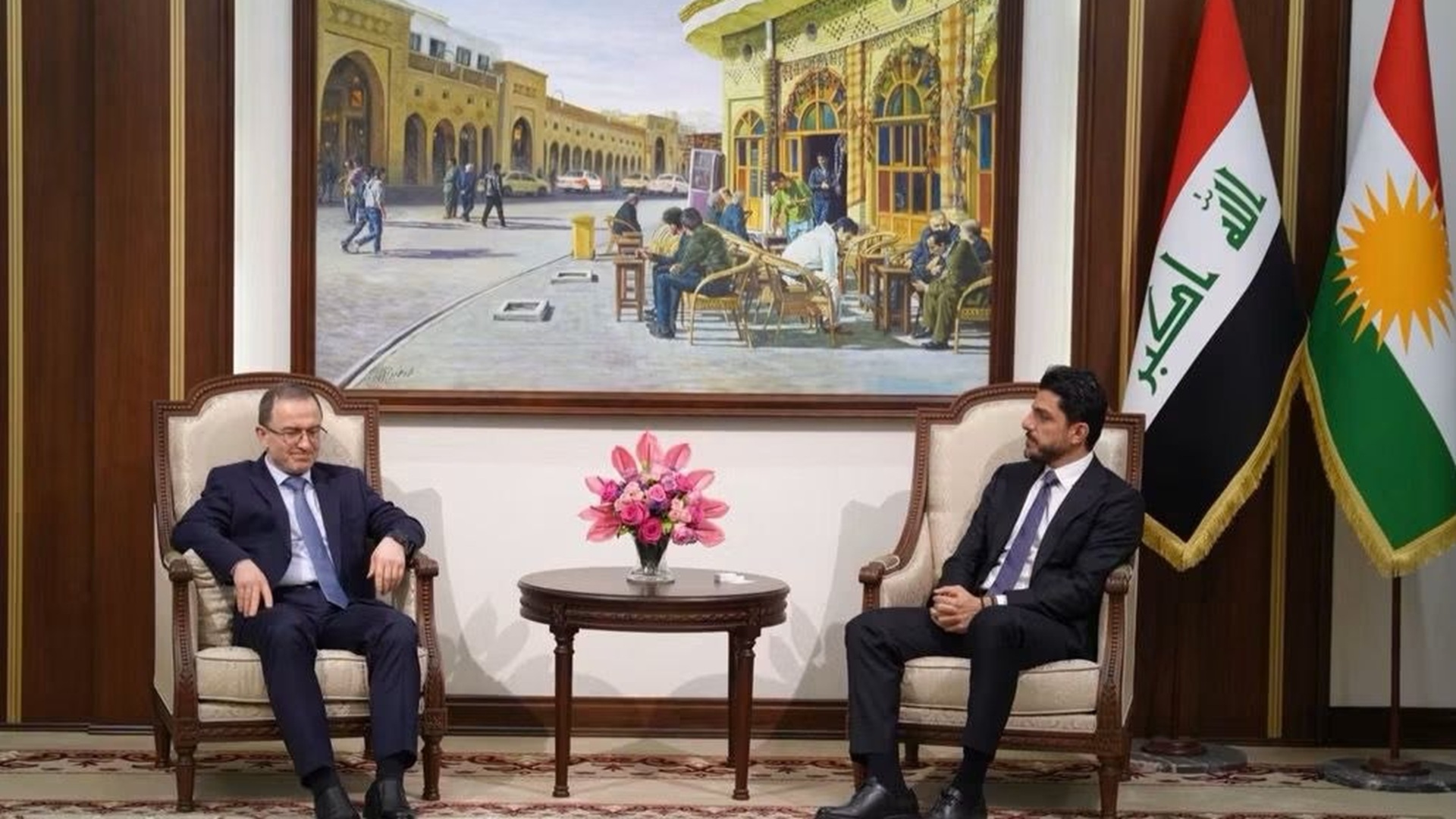
Darbaz Kosrat Rasul Receives Russian Ambassador for Talks on Political Developments
10:36 PM - 2026-06-23
.jpg)
Qubad Talabani: Baghdad and Erbil Must Work Together to Strengthen Iraq’s Economy
05:13 PM - 2026-06-23
Most read
-
Iraq Increases Kirkuk Oil Exports to 7 Million Barrels a Month, Says SOMO
Iraq 03:37 PM - 2026-06-23 -
Hero Khan: Fighter, Diplomat, Witness
Opinions 09:51 AM - 2026-06-24 -
Qubad Talabani: Baghdad and Erbil Must Work Together to Strengthen Iraq’s Economy
Kurdistan 05:13 PM - 2026-06-23 -
Qubad Talabani Discusses Tourism Development Strategy in Meeting with Tourism Board
Kurdistan 06:27 PM - 2026-06-23 -
Trump Claims Iran Agreed to Nuclear Inspections, Tehran Rejects Assertion
World 03:56 PM - 2026-06-23 -
Teen Author and Translator Pursues Multilingual Success
Kurdistan 01:24 PM - 2026-06-24 -
Darbaz Kosrat Rasul Receives Russian Ambassador for Talks on Political Developments
P.U.K 10:36 PM - 2026-06-23 -
Oil Prices Fall for Third Straight Day as Hormuz Shipping Recovers
News 10:50 AM - 2026-06-24
The News in your pocket
Download
 Application