
PUK President: We Stand Ready, as Always, to Stand with Our Allies to Try to Bring Stability, Peace
P.U.K 10:16 AM - 2026-03-07 PUKMEDIA
PUK President Bafel Jalal Talabani.
In an exclusive interview with Fox News’s Bret Baier, Bafel Jalal Talabani, President of the Patriotic Union of Kurdistan (PUK), delivered an assessment of the escalating conflict in Iran, warning that hostilities have intensified across all fronts and show no signs of slowing.
Here is the full text of the interview:
Baier: The Kurds are among the largest stateless ethnic group in the world, with roughly 30 million living as minorities in Türkiye, Iraq, Iran, and Syria. The Kurds represent about 10% of the Iranian population. They make up about 15% of the population in Iraq. The groups in Iraqi Kurdistan have a long history of working with the U.S. during both the Iraq war and the battle against ISIS. Let's first start big picture and paint the picture from where you sit of what you see with this war in Iran and what you think the implications are of it as it exists now?
President Bafel: “We saw the hostilities start surprisingly, and it seems to be a massive escalation across all fronts. Kurdistan has come under attack from several different angles, and I'm not seeing any sign of a slowdown. If anything, I'm seeing an escalation.”
Baier: So the U.S. is working on taking out missile sites and drone factories and that sort of thing. But as far as groups on the ground fighting the Iranians, there's reporting that thousands of Iranian Kurds are preparing for this operation. Where does that stand?
President Bafel: “There are a lot of Iranian Kurds that deserve dignity and they deserve perhaps better treatment. But as for any actual preparation and armed Kurds inside Iran, there are elements and there's lots of political organisation. But most of the most effective fighting forces are actually outside of Iran. They're on the borders here.”
Baier: You had a conversation with President Trump. What was that like?
President Bafel: “He was very charming. He was very kind. I could feel the emotion in his voice. He said that the Kurds were great fighters. My understanding is that the protection of their people in Iraq is paramount. He's very grateful for all the years that we have served and I have spent with your special forces.”
Baier: You also talked to the Iranian foreign minister. Yes. What is their take on things from your call? Do you believe that regime change is possible the way it's heading right now?
President Bafel: “The Foreign Minister, His Excellency, expressed great disappointment, if I'm honest with you. He indicated that, as far as they were concerned, the talks were going well. He implied that a technical group was supposed to sit together in the upcoming days to discuss technical matters. He indicated that this wasn't a war that they were looking forward to, but it was a war they would have to fight. It's definitely existential to them. I got the impression that they were open to some form of peaceful negotiation, which realistically is the only real solution to this issue. Regime change at the moment doesn't look on the cards from what I see. We've seen no uprisings anywhere. We've seen nothing of that. But it's early days. I expect this operation to be long and very difficult. ”
Baier: You think there are difficult days ahead. The President is suggesting that he would only accept unconditional surrender in his words to a reporter. So you don't see that right now that this is on the cusp of happening?
President Bafel: “I don't, sir. No, I don't see that right now. I think that the regime has been planning for this for 45 years. And you can expect a fierce resistance. The definition of regime change is important. What is the definition of regime change? And is there an off-ramp? Because some could argue that most mission parameters have been achieved. So is there an off-ramp where now perhaps we can try to resolve this diplomatically?”
Baier: Yeah, I think that from the administration, at least listening to them, taking out the ballistic missile capability, making sure that Iran never gets a nuclear weapon was the original objective going in.
President Bafel: “Exactly.”
Baier: The Israelis clearly are more wanting specific regime change to get a different leader in place that the U.S. and Israel can work with.
President Bafel: “I understand that. And I think that, Mr. Baier, the conditions—I keep hearing the comparisons to 2003. I think the conditions are very different to 2003. In 2003, there was legitimate, well-known, respected opposition to Saddam among the Shiites, among the Kurds. I don't really see that in Iran now. There isn't a standard, a symbol for people to follow, and that will make it very difficult. Troops on the ground with a country the size of Western Europe? Not sure if that's feasible either, but there are many options, and I think the U.S. administration is wise enough to modify their position as the battle changes and as the battlefield changes.”
Baier: Just to be clear, so there's no armed cross-border operation happening now from your territory in Iraq involving Iranian Kurds into Iran?
President Bafel: “Not that I see. And you could argue that that's actually a detriment. Iranians, like everybody else, are very a nationalistic person. And I believe that if they fear that Kurds coming in from elsewhere will cause a split or a splintering of their country, this may actually unify the people and against this separatist movement. Then you have the complications of Türkiye. Türkiye will have legitimate concerns of this happening. You will have Turkish intervention against the Kurdish troops. At the same time, there is a problem with the Assyrians. I think it's a very complicated scenario, and perhaps Kurds being tip of the spear is not the way to go.”
Baier: There are many minorities, you're right, in Iran, and it's very complex as far as how it comes together. If you were to look into a crystal ball, how do you think this ends?
President Bafel: “I think that Kurdistan needs to be a bridge, not a battlefield. The Kurds are uniquely positioned as being your [U.S.] great allies and a partner and a neighbor of Iran. I think we're uniquely positioned to play a role in de-escalation when the time is appropriate, like my late father used to play that role. But what I see now, from what I'm seeing, is a weakened Iranian system. But the institutions, though very different to ours, are institutions, and they remain solid. I think that once military objectives are achieved, I dare say that it will be the time for diplomacy. And at that time, we stand ready, as always, to stand with our friends and allies to try to bring stability, peace and prosperity to this region that truly has suffered from far too many wars and far too many conflicts.”
Baier: Dealing with the drone threat from Iran, because that's what we're seeing most in some of these Gulf countries. Yes. Are you worried about attacks and how to defend against those drone attacks that come in swarms? What do you make of the threats that are happening in swarms?
President Bafel: “Not to sound flippant, sir, it's not our first rodeo and we have absolutely no defence against any drones. So I think the less time spent worrying about it, the better.”
Baier: Yeah. I got you. And the U.S. us attempting to deal with all of those threats together. It's very interesting to hear your perspective. The thing you are most worried about what is it?
President Bafel: “The humanitarian crisis. I think the people of the Middle East have suffered enough, and I urge all sides to try to look at A less bloody way to resolve our issues. I understand that... And I do believe, I genuinely believe that Mr. Trump in his heart wants peace. And I understand the theory of peace is strength. And I also think that when the day comes to acknowledge victory, there will be grace in that victory. And we may be able to have dialogue and we may be able to resolve this issue through the only way that will make a long-lasting peace. And that's dialogue, stability, peace.”
PUKMEDIA
More news
-
Oil Prices Fall for Third Straight Day as Hormuz Shipping Recovers
10:50 AM - 2026-06-24 -
Qubad Talabani Discusses Tourism Development Strategy in Meeting with Tourism Board
06:27 PM - 2026-06-23 -
Iraq Increases Kirkuk Oil Exports to 7 Million Barrels a Month, Says SOMO
03:37 PM - 2026-06-23 -
Vance Says Talks with Iranian Officials Laid ‘Good Foundation’ for Deal to End War
01:06 PM - 2026-06-23
see more
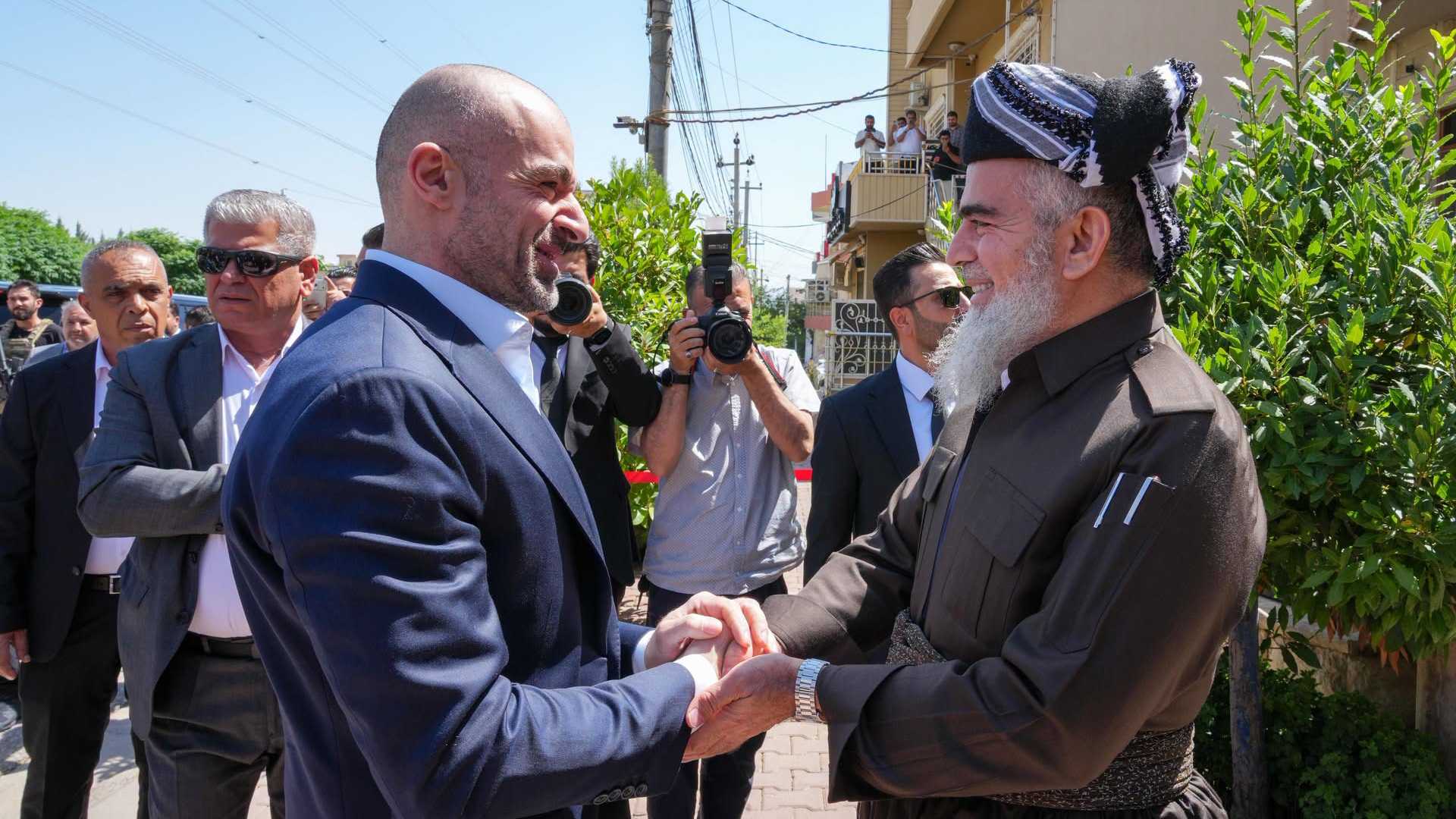
Kurdistan 04:00 PM - 2026-06-24 PUK President, KJG Leader Discuss Unified Efforts to Resolve Outstanding Issues
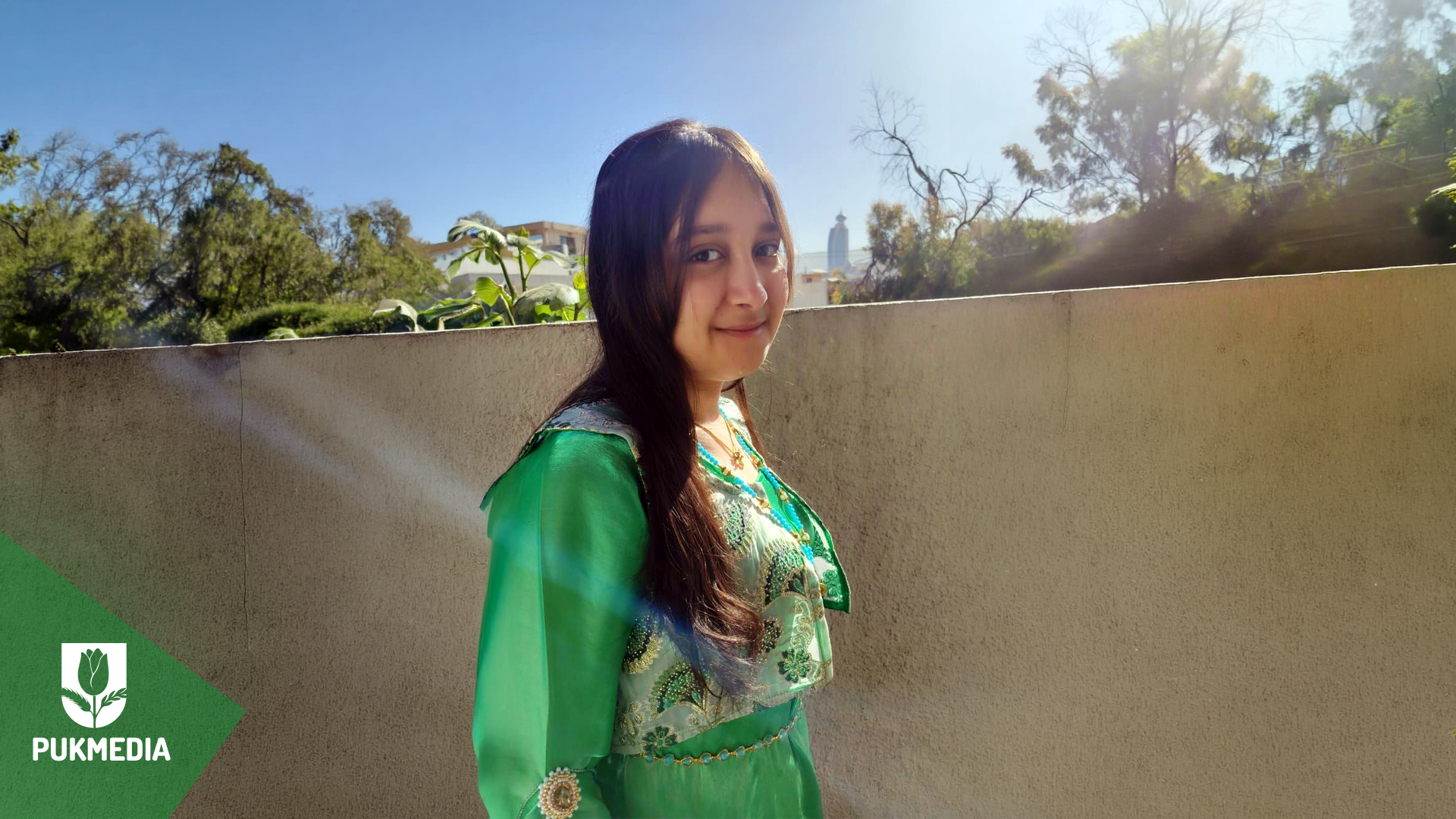
Teen Author and Translator Pursues Multilingual Success
01:24 PM - 2026-06-24
.jpg)
International Day of Women in Diplomacy Celebrated Worldwide
09:27 AM - 2026-06-24
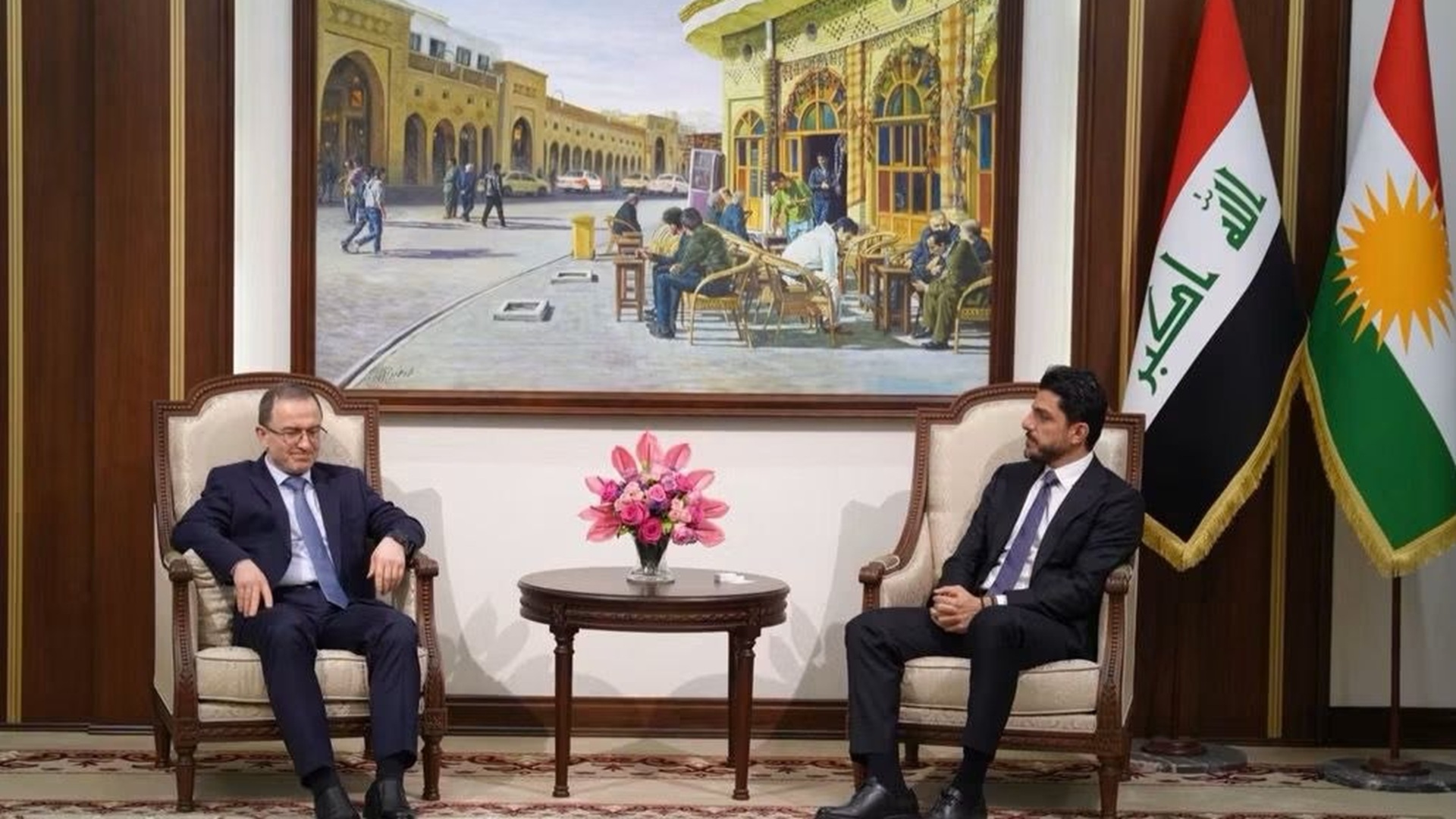
Darbaz Kosrat Rasul Receives Russian Ambassador for Talks on Political Developments
10:36 PM - 2026-06-23
.jpg)
Qubad Talabani: Baghdad and Erbil Must Work Together to Strengthen Iraq’s Economy
05:13 PM - 2026-06-23
Most read
-
Iraq Increases Kirkuk Oil Exports to 7 Million Barrels a Month, Says SOMO
Iraq 03:37 PM - 2026-06-23 -
Hero Khan: Fighter, Diplomat, Witness
Opinions 09:51 AM - 2026-06-24 -
Qubad Talabani: Baghdad and Erbil Must Work Together to Strengthen Iraq’s Economy
Kurdistan 05:13 PM - 2026-06-23 -
Qubad Talabani Discusses Tourism Development Strategy in Meeting with Tourism Board
Kurdistan 06:27 PM - 2026-06-23 -
Darbaz Kosrat Rasul Receives Russian Ambassador for Talks on Political Developments
P.U.K 10:36 PM - 2026-06-23 -
Teen Author and Translator Pursues Multilingual Success
Kurdistan 01:24 PM - 2026-06-24 -
Trump Claims Iran Agreed to Nuclear Inspections, Tehran Rejects Assertion
World 03:56 PM - 2026-06-23 -
Oil Prices Fall for Third Straight Day as Hormuz Shipping Recovers
News 10:50 AM - 2026-06-24
The News in your pocket
Download
 Application