

Yemen's Houthis Declare Naval Blockade Against Saudi Arabia
World 05:43 PM - 2026-07-20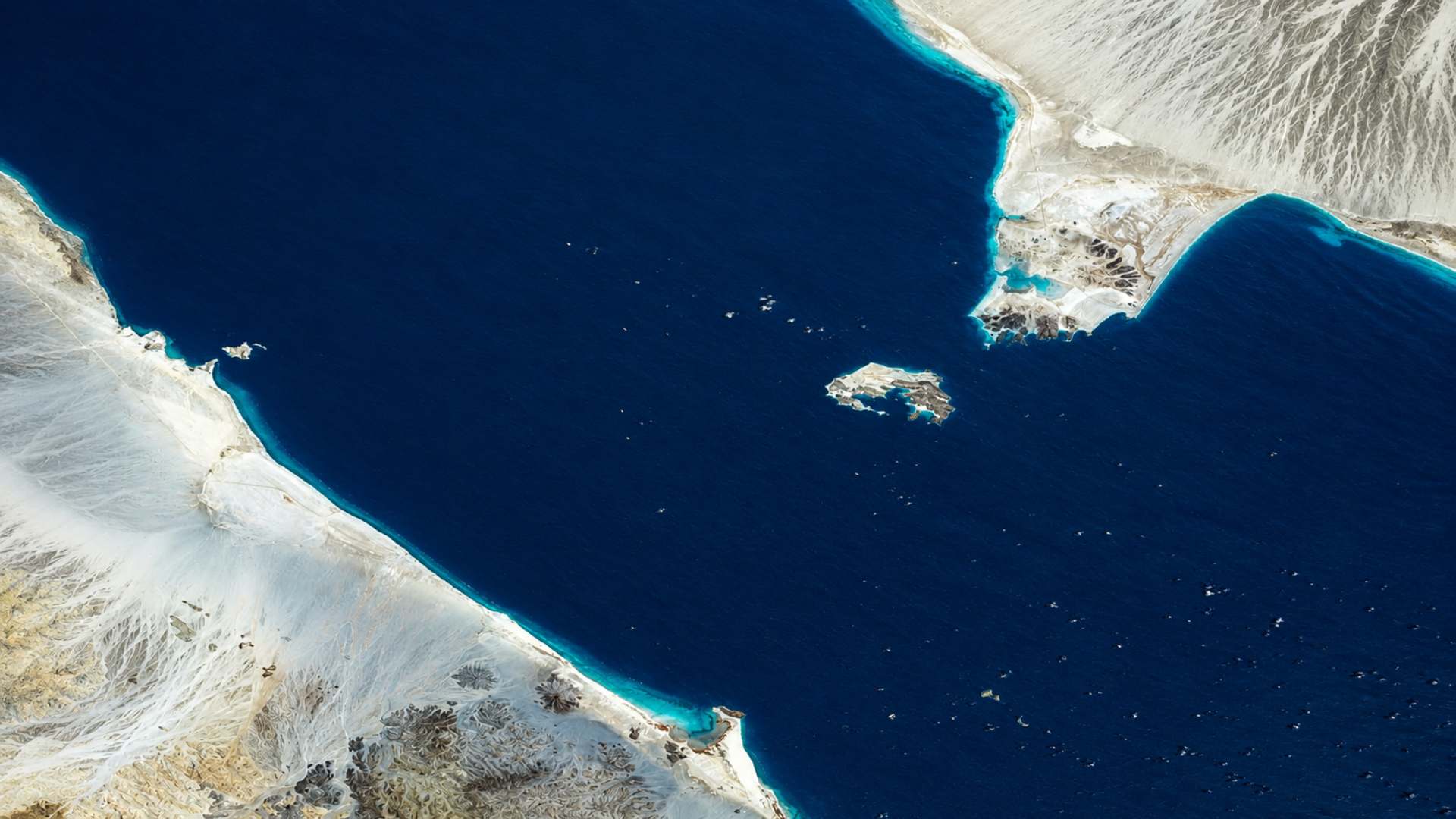 NASA
NASA
The Bab al-Mandab strait, 20 miles wide, separating Yemen from Djibouti and Eritrea.
Yemen's Iran-aligned Houthi movement announced on Monday that it was imposing a naval blockade on Saudi Arabia, opening a new front in the regional conflict linked to the United States' war with Iran and raising fresh concerns over global energy supplies and maritime trade.
The announcement came despite signs that Tehran and Washington wanted to resume diplomacy to halt an escalating cycle of attacks that has all but wrecked a fragile interim agreement signed last month. Oil prices briefly rose after the Houthis' statement but fell back due to traders' hopes for a diplomatic breakthrough.
Iran had been pressing the Houthis to close the Bab el-Mandeb gateway to the Red Sea if the U.S. continued to attack Iranian power infrastructure. The full closure of the strait would cut global oil supply by 7% as it would leave most Saudi oil exports unable to leave the region. The disruption would add to the massive cut to global oil flows from the war in the Gulf, which has already reduced shipments by 10% of global supply.
In their statement, the Houthis' armed forces said they were declaring "a maritime embargo against the criminal Saudi enemy, based on the equation of 'an eye for an eye', effective immediately" in response to what they called "an unjust and oppressive siege" imposed on Yemen by the Saudis.
A senior Iranian official told Reuters on Monday that Tehran had received a proposal from mediators for a 10-day ceasefire in an effort to salvage the interim deal, intended to pave the way to a lasting agreement to end the war that began on February 28 with U.S.-Israeli attacks on Iran.
Iran's Foreign Ministry said mediators had recently presented proposals to Tehran, signalling that diplomatic contacts remain active.
Separately, two Pakistani government sources said Iran's Interior Minister Eskandar Momeni, on his second visit to Islamabad in less than a week, had asked Pakistan to resume its mediation role in Iran's conflict with the United States.
The diplomatic push followed another night of U.S. strikes on Iranian cities and attacks by Iran's Revolutionary Guards on U.S. military assets across the region.
The Islamic Revolutionary Guard Corps (IRGC) said two oil tankers had exploded after attempting to transit the strait via an "unsafe" route. On Sunday, the IRGC had said two ships were involved in an "accident" in the same area. It was unclear whether the two incidents were related.
Separately, a vessel was struck by an unknown projectile off Oman's coast, overlooking the Strait of Hormuz, the United Kingdom Maritime Trade Operations agency said. The vessel remains adrift but the crew are safe, it said.
U.S. Central Command said its ninth consecutive night of strikes against Iran aimed at "degrading" the country's ability to attack commercial vessels in the strait's vital shipping lanes. It gave no further details.
In Iran, explosions were reported in Tabriz, Chabahar, Konarak, Bandar Mahshahr and Bandar Imam Khomeini. One person was killed and several others wounded southwest of Tabriz, according to state news agency IRNA.
The IRGC said it targeted U.S. aircraft at Jordan's Aqaba airport with ballistic missiles, as well as military assets at Kuwait's Al-Adiri camp and Ali Al Salem Air Base, and positions in Syria.
Kuwait's government said a desalination plant had been attacked on Sunday for the second day running, causing a fire, in what it called a direct strike on vital civilian infrastructure.
Desalination facilities supply most drinking water in many Gulf states, serving tens of millions of people in one of the world's driest regions.
U.S. Secretary of State Marco Rubio vowed that the United States would continue to target Iran as long as it attacked global commercial shipping.
"As long as Iran insists on controlling an international waterway, we're gonna have to respond to that. The United States always remains open to a diplomatic solution," Rubio said.
Iran's Foreign Ministry signalled that Tehran also did not rule out a return to diplomacy when asked if the door to talks with the U.S. was now closed.
Confirming that Tehran had received "proposals" from mediators, ministry spokesperson Esmaeil Baghaei said he could not provide details. "The main point is that in recent days, both the diplomatic apparatus has been active and ideas from some mediators have reached us," he added.
Source: Reuters
PUKMEDIA
More news
-
Flash Floods Kill 20 in Afghanistan, More Than 100 Reported Missing
11:16 PM - 2026-07-20 -
Ontario Wildfires Spread as Smoke Blankets Parts of the U.S.
10:17 PM - 2026-07-20 -
Yemen's Houthis Declare Naval Blockade Against Saudi Arabia
05:43 PM - 2026-07-20 -
Hundreds Protest in Delhi Demanding Statehood for Indian Kashmir
02:40 PM - 2026-07-20
see more
P.U.K 08:39 PM - 2026-07-20 Darbaz Kosrat Rasul Praises French CG's Efforts to Strengthen Bilateral Relations
.jpg)
Kremlin Says Rubio and Lavrov Talks at ASEAN Would Be Welcome
04:18 PM - 2026-07-20
.jpg)
Kurdistan Region Asayish Arrests Two Suspected ISIS Terrorists
10:57 AM - 2026-07-20
.jpg)
PUKMEDIA Releases Weekly Digital Newsletter- Issue 183
09:22 AM - 2026-07-20
Latif Nerwayi: President Bafel's Message Emphasised Unity to Overcome Challenges
07:58 PM - 2026-07-19
Most read
-
Ontario Wildfires Spread as Smoke Blankets Parts of the U.S.
World 10:17 PM - 2026-07-20 -
PUKMEDIA Releases Weekly Digital Newsletter- Issue 183
Kurdistan 09:22 AM - 2026-07-20 -
Hundreds Protest in Delhi Demanding Statehood for Indian Kashmir
World 02:40 PM - 2026-07-20 -
Kurdistan Region Asayish Arrests Two Suspected ISIS Terrorists
Kurdistan 10:57 AM - 2026-07-20 -
Yemen's Houthis Declare Naval Blockade Against Saudi Arabia
World 05:43 PM - 2026-07-20 -
Andy Burnham Becomes UK Prime Minister, Pledging to ‘Rewire Britain’
World 10:46 AM - 2026-07-20 -
Kremlin Says Rubio and Lavrov Talks at ASEAN Would Be Welcome
World 04:18 PM - 2026-07-20 -
Oil Surges Above $90 as Gold Declines Amid Rising Regional Tensions
News 10:17 AM - 2026-07-20
The News in your pocket
Download
 Application