

Anniversary of Iraq’s Liberation: 23 Years Since 9 April 2003
Kurdistan 09:23 AM - 2026-04-09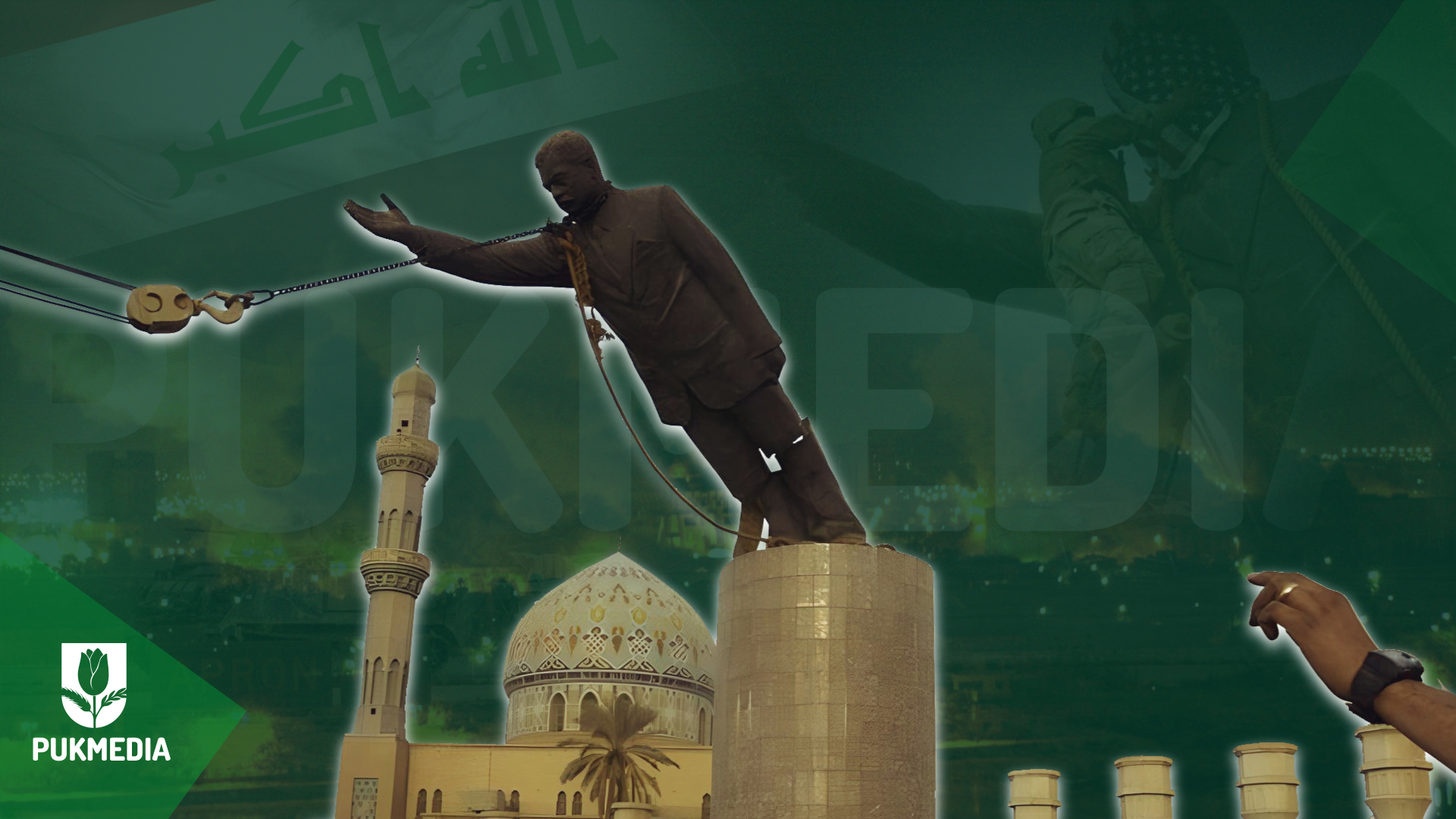 PUKMEDIA
The end of Saddam Hussein’s dictatorship.
Today, Thursday 9 April 2026, marks the 23rd anniversary of Iraq’s liberation from the Ba'athist regime. On this day in 2003, US-led coalition forces entered Baghdad and other Iraqi cities, bringing an end to the rule of Saddam Hussein, which had lasted for more than three decades following a military coup.
Iraqis will never forget the scenes of citizens striking symbols of the fallen regime, reflecting the collapse of the Ba'athist era.
The Iraq War began on 20 March 2003, led by US-led coalition forces, with American and British troops forming the vast majority of those involved.
Several key factors were cited by the coalition as reasons for launching the operation:
1. Saddam Hussein’s regime repeatedly failed to comply with United Nations resolutions, particularly those concerning weapons inspections in Iraq.
2. The regime was accused of developing and maintaining weapons of mass destruction and failing to fully cooperate with UN inspectors.
3. Alleged links between Saddam Hussein’s regime and extremist organisations were cited as a threat to international security.
4. The broader aim of promoting political change in the Middle East.
Military operations began on 20 March 2003, with coalition forces relying heavily on speed and surprise. Rather than following a prolonged air campaign, as seen in earlier conflicts, both air and ground operations were launched simultaneously in a strategy widely referred to as “shock and awe”.
Coalition forces advanced rapidly through the Iraqi desert, largely bypassing major cities to avoid prolonged urban combat. However, on 27 March 2003, sandstorms slowed the advance, and resistance from Iraqi forces was encountered near Al-Kifl, close to Najaf and Kufa.
British forces laid siege to Basra for two weeks before launching an assault on the city. Following heavy fighting, Basra was captured on 27 March 2003. By 9 April 2003, Iraqi forces had largely collapsed in Amarah.
Three weeks into the conflict, US forces advanced towards Baghdad. Initial expectations suggested a prolonged siege and possible street fighting. On 5 April 2003, US armoured units launched an assault on Baghdad International Airport, encountering resistance from Iraqi forces stationed there.
On 7 April 2003, coalition forces moved into central Baghdad, including key government sites such as the Republican Palace. Within hours, organised Iraqi resistance began to collapse.
By 9 April 2003, coalition forces had taken control of much of Baghdad. Images broadcast worldwide showed the fall of a statue of Saddam Hussein in Firdaws Square, an event widely seen as symbolising the end of his rule.
Later that day, residents gathered in the square as coalition forces secured the area. The toppling of the statue became one of the defining moments of the conflict, marking the collapse of the Ba'athist regime and the end of Saddam Hussein’s rule.
More news
-
Egypt Uncovers Lost Byzantine-Era City in Western Desert
10:02 PM - 2026-07-04 -
Iraq Recovers Over $25 Million in Misappropriated Funds, Pursues Assets in Five Countries
05:25 PM - 2026-07-04 -
Energy Advisor: Kurdistan Central to Emerging Trade Corridors
03:34 PM - 2026-07-04 -
Thousands Protest in Germany Against the Far-Right AfD
01:40 PM - 2026-07-04
see more
.jpg)
PUK President Emphasises Importance of Joint Diplomatic Efforts to Reduce Tensions
12:30 PM - 2026-07-04
U.S. President Hails America at U.S. 250th Anniversary Celebrations
11:48 AM - 2026-07-04
.jpg)
Iranians Gather for Week-Long Funeral Ceremonies for Khamenei
10:31 AM - 2026-07-04

Iraqi Delegation Holds Energy Talks with Türkiye in Ankara
11:34 PM - 2026-07-03
Most read
-
Russian Defence Ministry Says They Captured Kostiantynivka in Eastern Ukraine
World 09:21 AM - 2026-07-04 -
PUK President Emphasises Importance of Joint Diplomatic Efforts to Reduce Tensions
P.U.K 12:30 PM - 2026-07-04 -
Iraq Recovers Over $25 Million in Misappropriated Funds, Pursues Assets in Five Countries
Economy 05:25 PM - 2026-07-04 -
Thousands Protest in Germany Against the Far-Right AfD
World 01:40 PM - 2026-07-04 -
Panel Discussion Held on Overcoming Kurdistan's Political Deadlock and Preparing for Elections
P.U.K 12:20 PM - 2026-07-04 -
Energy Advisor: Kurdistan Central to Emerging Trade Corridors
Reports 03:34 PM - 2026-07-04 -
Iranians Gather for Week-Long Funeral Ceremonies for Khamenei
World 10:31 AM - 2026-07-04 -
U.S. President Hails America at U.S. 250th Anniversary Celebrations
World 11:48 AM - 2026-07-04
The News in your pocket
Download
 Application