

Artemis Crew Reaches the Moon, Approaches Record-Breaking Distance from Earth
World 06:09 PM - 2026-04-06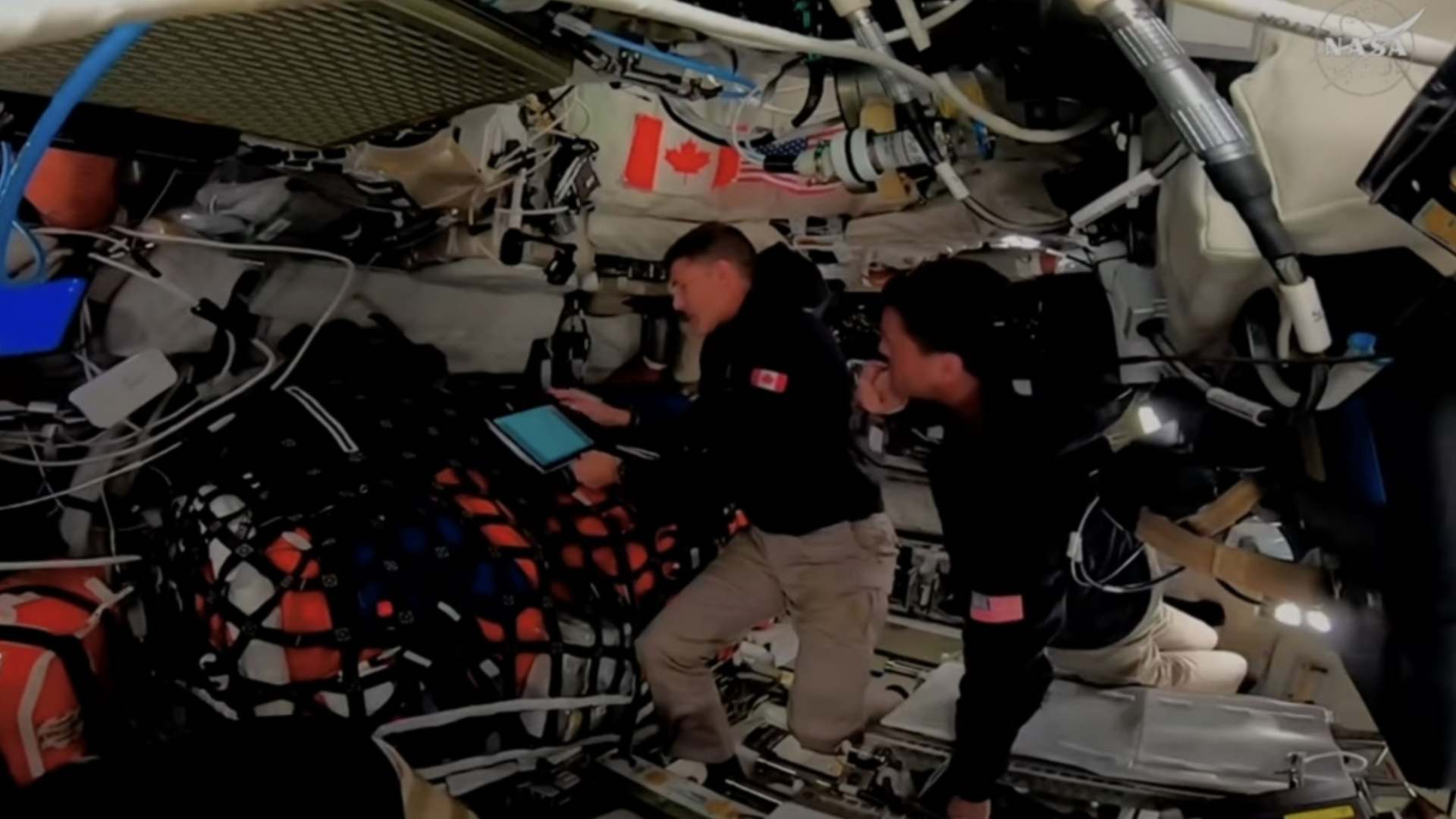 YouTube screenshot/Nasa
The Artemis II crew, flying in their Orion capsule since launching from Florida last week, are due to awake around 10.50am ET today for their sixth flight day.
The four astronauts of the Artemis II have entered the Moon’s gravitational sphere of influence early Monday morning as they continue their journey around the far side of the lunar surface, placing them on course to become the most distant human travellers in history.
The crew, aboard the Orion spacecraft since launching from Florida last week under NASA’s Artemis programme, are expected to reach their maximum distance from Earth at around 7:05 p.m. ET on Monday. At that point, they will be approximately 252,757 miles from Earth—surpassing the long-standing Apollo 13 record by 4,102 miles, which has stood for 56 years.
NASA astronauts Reid Wiseman, Victor Glover, Christina Koch, alongside Canadian Space Agency astronaut Jeremy Hansen, will pass behind the Moon’s far side during this milestone phase of the mission. From their vantage point, they will observe the lunar surface from around 4,000 miles above while Earth appears as a distant, basketball-sized sphere in the background.
The milestone marks a key moment in the nearly 10-day mission, which serves as the first crewed test flight of NASA’s Artemis programme. The broader initiative aims to return astronauts to the lunar surface by 2028 and establish a sustained human presence on the Moon in the following decade, laying the groundwork for future exploration of Mars.
The flyby, which officially begins at 2:34 p.m. ET, will place the spacecraft in darkness and temporarily disrupt communications as the Moon blocks signals to NASA’s Deep Space Network.
During the roughly six-hour flyby, the crew will capture high-resolution images of the Moon’s far side and the surrounding lunar environment using onboard cameras, documenting rare views of sunlight refracting around the lunar horizon—an effect resembling a solar eclipse from deep space.
The astronauts are also expected to document Earthrise from lunar orbit, offering a perspective of the home planet from record-breaking distance as the spacecraft emerges from behind the Moon.
Meanwhile, teams at NASA’s Johnson Space Center in Houston will monitor the mission closely, analysing real-time observations from the crew as part of ongoing scientific evaluation of lunar conditions and human spaceflight performance in deep space.
Source: Reuters
PUKMEDIA
More news
-
President Amedi: Jalal Talabani’s Legacy Will Continue to Inspire Future Generations
10:17 PM - 2026-07-14 -
China Does Not Seek a 'Sphere of Influence' in Relations with Pacific Island Nations, Foreign Minister Says
12:27 PM - 2026-07-14 -
Oil Climbs to One-Month High as U.S. and Iran Intensify Attacks in the Strait of Hormuz
09:05 AM - 2026-07-14 -
Ukraine to Manufacture French Missiles and Order Warplanes, Macron Says
11:22 PM - 2026-07-13
see more

Kurdistan 10:28 PM - 2026-07-14 Qubad Talabani Welcomes Renaming of Sulaymaniyah Airport in Honour of Mam Jalal

Trump Welcomes Iraqi PM al-Zaidi to White House, Reaffirms Strong US-Iraq Partnership
09:02 PM - 2026-07-14

Sulaymaniyah International Airport Officially Renamed Jalal Talabani International Airport
07:20 PM - 2026-07-14
.jpeg)
Qubad Talabani Reviews Progress on Major Water Project to End Shortages in Chamchamal
02:36 PM - 2026-07-14

Most read
-
Remembering 14 July Revolution That Ended Iraq's Monarchy
Iraq 11:11 AM - 2026-07-14 -
Iraqi PM Discussed Bilateral Cooperation and Regional Stability with U.S. Special Envoy in Washington
Iraq 10:01 AM - 2026-07-14 -
Trump Says U.S. Has Reinstated Blockade on Iranian Shipping in Hormuz
World 09:05 PM - 2026-07-13 -
Houthis Launch Missile Attacks on Saudi Arabia After Years of Calm
World 09:45 AM - 2026-07-14 -
China Does Not Seek a 'Sphere of Influence' in Relations with Pacific Island Nations, Foreign Minister Says
World 12:27 PM - 2026-07-14 -
Trump Welcomes Iraqi PM al-Zaidi to White House, Reaffirms Strong US-Iraq Partnership
Iraq 09:02 PM - 2026-07-14 -
Oil Climbs to One-Month High as U.S. and Iran Intensify Attacks in the Strait of Hormuz
News 09:05 AM - 2026-07-14 -
Ukraine to Manufacture French Missiles and Order Warplanes, Macron Says
World 11:22 PM - 2026-07-13
The News in your pocket
Download
 Application