

The History of the PUK: 51 Years Since Its Founding
Reports 12:01 PM - 2026-05-31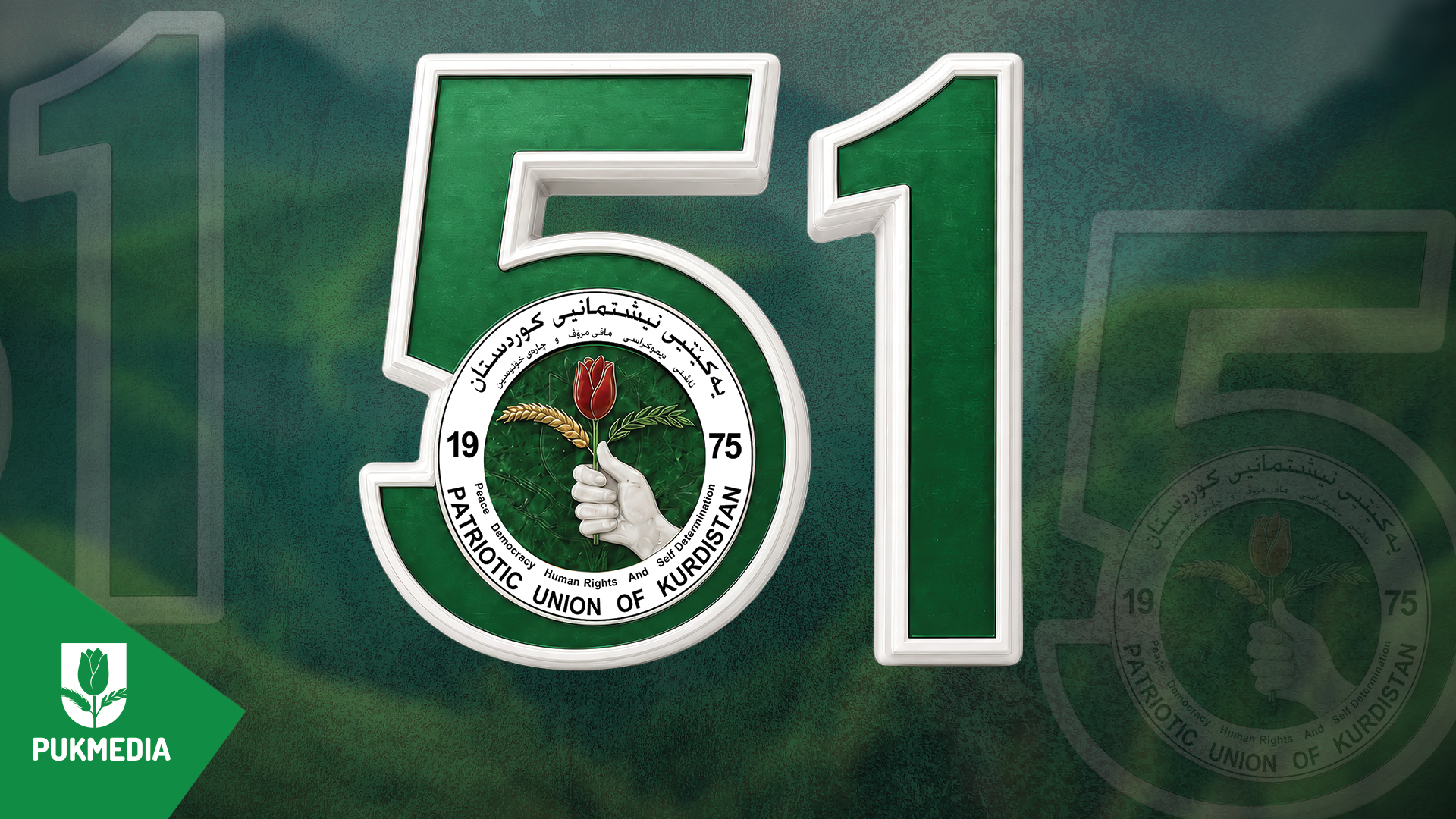 PUKMEDIA
Marking the PUK’s 51st Anniversary.
The Patriotic Union of Kurdistan (PUK) is a political party founded in the Kurdistan Region on 1 June 1975. This year marks the 51st anniversary of its founding. The party’s principles are rooted in democracy, human rights, and the right to self-determination. The PUK is also a member of Socialist International.
How did the PUK come into existence?
The PUK emerged in the aftermath of the collapse of the Kurdish revolution in 1975. Its co-founders — Jalal Talabani, Nawshirwan Mustafa, Fuad Masoum, Kamal Fuad, Adil Murad, Omar Sheikhmus, and Abdul-Razaq Faili — met on 22 May 1975 at Talitla Restaurant in Damascus to discuss the establishment of a new political organisation. The founding statement of the PUK was subsequently announced on 1 June 1975.
On 17 December 1975, the founding committee organised a broad meeting during which members outlined the foundations of the PUK’s activities both within the country and abroad.
Why was the PUK founded?
The PUK was established in response to the collapse of the previous Kurdish uprising, known as the Aylul Revolution, after the former Iraqi government withdrew from the peace and autonomy agreement signed with the Kurdish people on 11 March 1970. The agreement was effectively abandoned after the Iraqi government reached an accord with the Shah of Iran on 6 March 1975 during the OPEC summit in Algiers, commonly referred to as the Algiers Accord.
Under the accord, Iraq and Iran agreed to secure their shared border regions and cease support for armed opposition groups operating in those areas. Iran subsequently withdrew its support for Mustafa Barzani and the Kurdish revolutionary leadership.
As a result, on 20 March 1975, the leadership of the Kurdish revolution announced the end of the uprising through Dengi Geli Kurdistan Radio, in a statement read by a Peshmerga commander. The announcement declared that Kurdish fighters and civilians would be spared if they surrendered to the Iraqi government.
The establishment of the PUK also came in response to the Iraqi regime’s campaign of repression against the Kurdish people. This included the forced displacement of Kurdish civilians, intellectuals, and prominent figures to central and southern Iraqi cities. Within a short period, between 30,000 and 40,000 people were forcibly relocated to cities including Nasiriyah, Diwaniyah, Samawah, Ramadi, and Amarah.
At the same time, the Ba’ath regime expanded its intelligence and security apparatus and strengthened its military presence across Kurdistan. Ba’athist organisations also sought to recruit Kurdish civil servants and citizens into the Ba’ath Party through a policy known as “Ba’athification”.
In response to these developments, and only months after the end of the Kurdish revolution, a group of Kurdish revolutionary figures and politicians announced the formation of the PUK and launched a new phase of resistance against the Ba’ath regime.
Key components of the PUK
1-Marx–Lenin Association of Kurdistan
The Marx–Lenin Association of Kurdistan played a significant role in the formation of the PUK. Among its leading members were Shihab Sheikh Nuri, Muhammad Mirza Saeed, Jaafar Abdul-Wahid, and Faraidun Abdul-Qadir.
Between 1970 and 1975, the association grew considerably, particularly among members of the Kurdistan Students Union and the Kurdistan Youth Union. Its cadres later participated in the Kurdish-Arab conflict between 1974 and 1975.
In early 1975, Mam Jalal sent a letter to the leadership of the association urging the launch of a long-term armed struggle. The proposal for the establishment of a new national political organisation was welcomed, and discussions were held during a two-day meeting in Kelu village.
Following the meeting, cadres began collecting and concealing weapons. Between 27 March and 5 April 1975, members returned from the mountains to urban centres to reorganise their structures and prepare armed groups for deployment to Qaradagh, Sharbazher, Koya, Hawraman, Halabja, and Shameran.
The association ultimately became one of the principal catalysts for the establishment of the PUK.
In August 1975, the Iraqi authorities uncovered elements of the organisation. Anwar Zorab was arrested at his home in possession of a pistol, documents, and written statements. The Ba’ath regime subsequently launched a wider campaign of arrests against members of the association.
2-Socialist Movement
The Socialist Movement was formed following a series of meetings among cadres of the Aylul Revolution who had sought refuge in Iran in 1975. The first meeting was held in April of that year and included figures such as Omar Dababa, Ali Askari, Dr Khalid, Ali Hazhar, Kardo Galali, Ibrahim Ahmed, Jamal Agha, Rasul Mamand, Mala Nasih, Abdul-Rahman Goshini, lieutenant Tahir, Ali Wali, and Kamal Muhedin.
The participants agreed to establish a socialist political movement to oppose the Baghdad regime. The committee responsible for preparing the Socialist Movement issued its first statement in August 1976.
The initiative was supported by 72 founding members of the KDP, Saida Salih Yousifi, and several independent figures from different factions.
On 6 November 1976, Omar Dababa travelled to Damascus as the representative of the Socialist Movement and joined the PUK founding committee. The Socialist Movement thus became the first organisation, after the Marx–Lenin Association of Kurdistan, to formally join the PUK.
3-General Line (Heli Gishti)
Alongside these organisations, another group of revolutionary figures joined the PUK while remaining outside the two principal movements. Known as Heli Gishti — translated as the “General Line” or “Broad Line” — this group strongly supported the political vision of the PUK.
From 1977 onwards, Heli Gishti expanded significantly and established a number of organisations of its own. Prominent members included Dr Kamal Fuad, Dr Fuad Masoum, Adil Murad, Omar Sheikhmus, and Abdul-Razaq Faili.
The armed struggle phase
In mid-1976, the PUK began forming Peshmerga forces as part of a strategy to relaunch armed resistance throughout Kurdistan. Initially, the movement relied on hit-and-run tactics, which later became widely adopted.
To initiate the campaign, Mam Jalal coordinated with the Marx–Lenin Association and the Socialist Movement. On 23 and 24 May 1976, another meeting of the PUK founding committee was held in Damascus, where the decision to begin armed struggle was formally approved.
The founding committee subsequently dispatched the first Peshmerga groups into Kurdistan. Organisational cells in central cities were instructed to send armed groups into the mountains, while cadres living abroad were encouraged to return home and join the struggle.
The armed struggle proceeded in several stages:
* Establishing armed groups to restore morale and inform the public of a renewed Kurdish revolution.
* Launching attacks against Iraqi military bases and checkpoints in Kurdistan.
* Reorganising Peshmerga forces and introducing a new military discipline.
On 25 and 26 May 1976, armed groups mobilised in Haji Omaran and moved towards Qandil Mountains.
On 1 June 1976, marking the first anniversary of the PUK’s founding, the first armed unit — known as the Badinan Group from Syria — entered Kurdistan under the supervision of the late Ibrahim Azo.
On 26 June 1976, the PUK revolutionary leadership dispatched its first internal armed group to Suren Mountain in the Halabja area. In July, additional groups were sent from Sulaymaniyah to Qaradagh and Sharbazher, where they announced the revival of the Kurdish revolution. Another armed group affiliated with the Kurdistan Socialist Movement also travelled to the Qandil Mountains and began carrying out military operations.
PUKMEDIA
More news
-
Kazakh President Calls for Freeze of Ukraine War
10:35 PM - 2026-07-25 -
Iraq Seeks Alternative Export Routes as Strait of Hormuz Crisis Continues
07:58 PM - 2026-07-25 -
Indian Education Minister Quits Following Youth-Led Protests
05:46 PM - 2026-07-25 -
At Least 35 Killed After Two Buses Collide in Central Syria
05:00 PM - 2026-07-25
see more
.jpg)
World 10:40 PM - 2026-07-25 Iran Says Ukrainian Strike on Commercial Vessel in Caspian Sea Kills Sailor
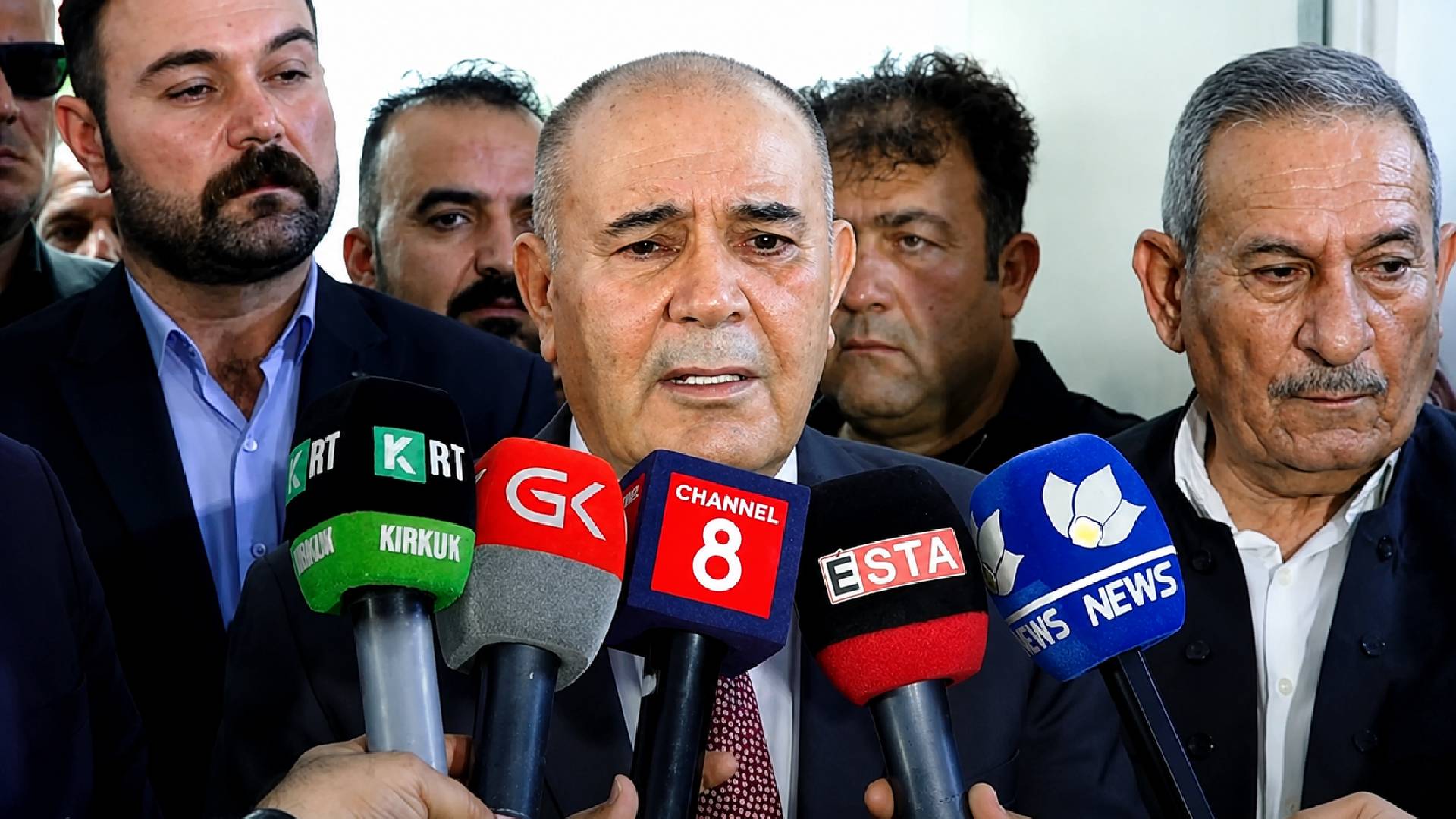
Pire: Inclusive KRG Cannot Be Formed Without the PUK
04:52 PM - 2026-07-25
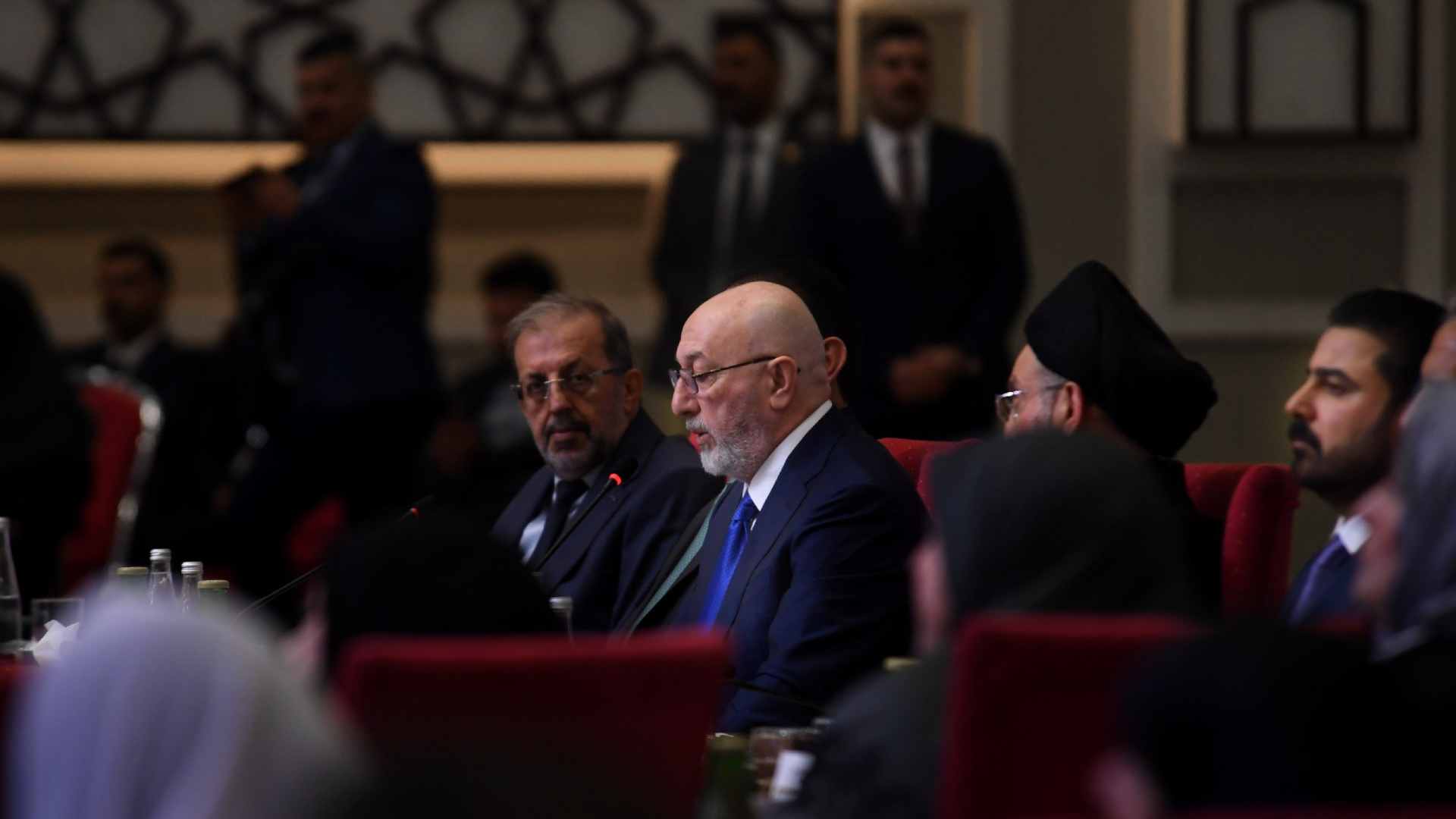
Iraqi President Urges Inclusion of Women in Top Cabinet Roles
12:36 PM - 2026-07-25
.jpg)
UN Secretary-General Arrives in Syria in First Visit Since Before Civil War
09:40 AM - 2026-07-25
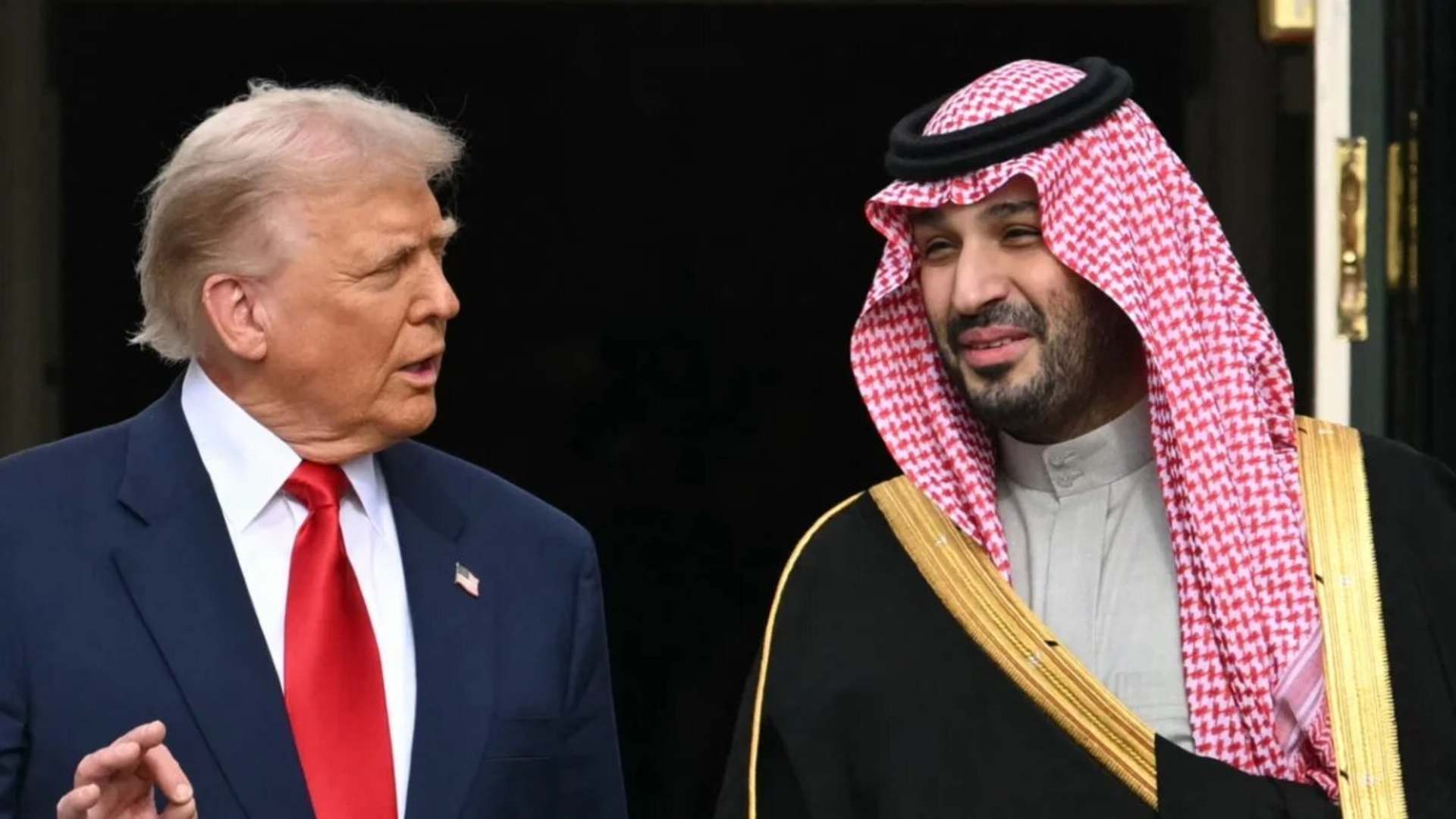
U.S. President Rules Out Saudi Civil Nuclear Deal Without Israel Normalisation
09:20 AM - 2026-07-25
Most read
-
UN Secretary-General Arrives in Syria in First Visit Since Before Civil War
World 09:40 AM - 2026-07-25 -
Romanian F-16s Down Second Drone Near Ukraine Border
World 01:33 PM - 2026-07-25 -
Zelenskiy Says U.S. and Ukraine Advancing Joint Drone Production
World 10:15 AM - 2026-07-25 -
Pire: Inclusive KRG Cannot Be Formed Without the PUK
P.U.K 04:52 PM - 2026-07-25 -
Italy's Defence Minister Offers Adviser Post to Ousted Ukrainian Counterpart
World 10:53 AM - 2026-07-25 -
At Least 35 Killed After Two Buses Collide in Central Syria
World 05:00 PM - 2026-07-25 -
Iraqi President Urges Inclusion of Women in Top Cabinet Roles
Iraq 12:36 PM - 2026-07-25 -
Iraq Seeks Alternative Export Routes as Strait of Hormuz Crisis Continues
Iraq 07:58 PM - 2026-07-25
The News in your pocket
Download
 Application