
Qubad Talabani Says Both U.S. and Iran Want a Deal
World 10:51 PM - 2026-05-11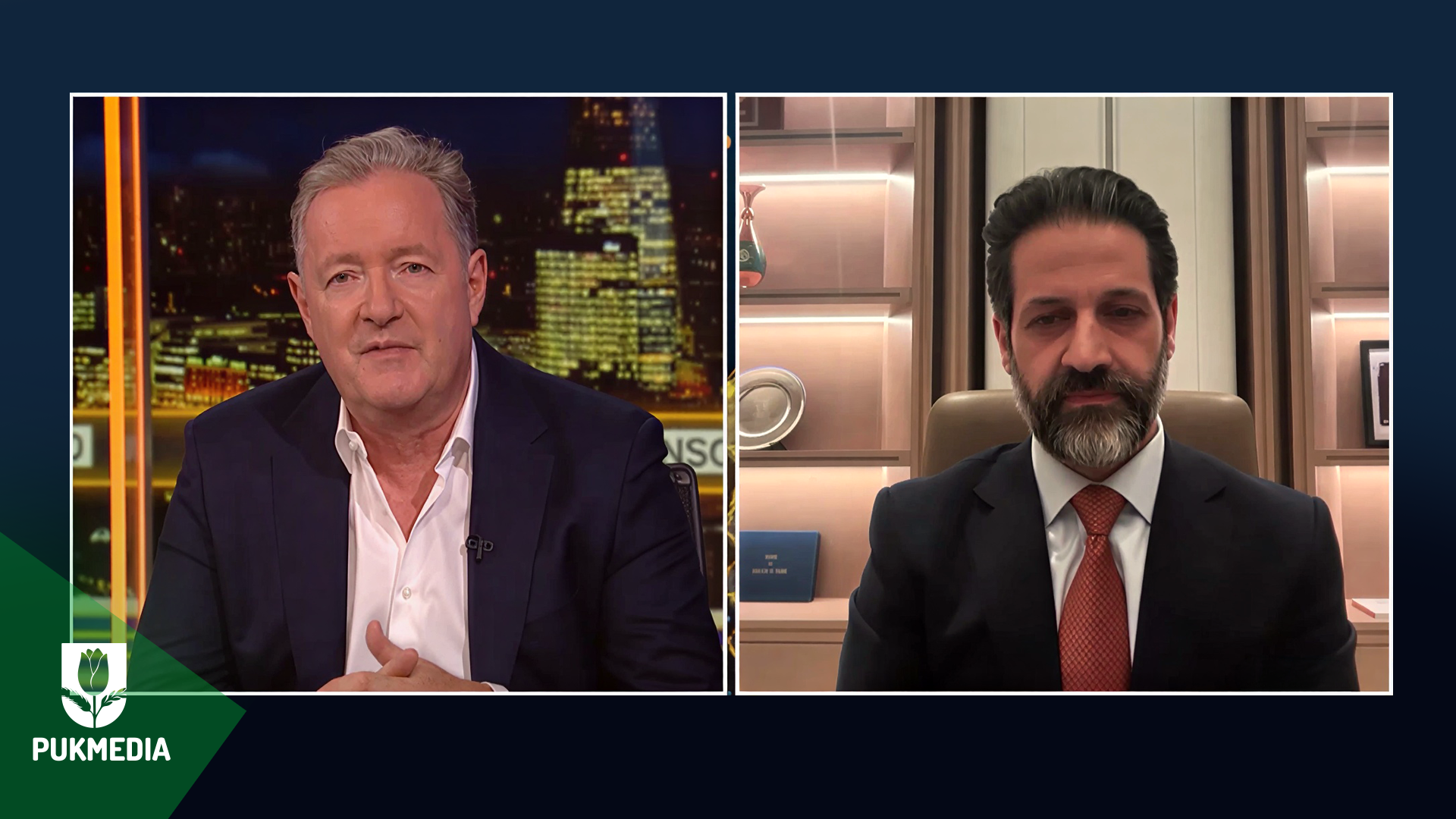 Qubad Talabani's Media Office
Qubad Talabani, Deputy Prime Minister of the Kurdistan Region.
In an interview with Piers Morgan on his Youtube programme "Uncensored", Qubad Talabani, Deputy Prime Minister of the Kurdistan Region, spoke about U.S.-Iran war and stated: "I strongly believe that President Trump wants a deal. I strongly believe the Iranians want a deal."
Here is the text of the full interview:
Last night the president shared to millions of his followers an interview praising him as a master dealmaker. Well, Qubad Talabani, Deputy Prime Minister of the Kurdistan Region, was the man with the warm words and he joins me now. Welcome to Uncensored.
Talabani:
"Thank you, Piers."
Morgan: What did you feel about President Trump reposting your interview last night? Were you flattered or slightly appalled?
Talabani:
"Obviously, I was flattered. I was surprised. I was getting a lot of messages from a lot of people saying that the president of the United States has reposted your article, so I must say I was a bit taken aback by the fact that he tweeted it, but you know, not disappointed that he did."
Morgan: The thrust of your interview was that you declared that Trump is master of the deal and can land a major deal to end the Iran war. But as my panel had just been deliberating, we can't work out how he does a deal that allows him to get out of this anytime soon with any kind of legitimate claim to victory. Can you?
Talabani:
"I think if he's left to his own devices, and if this is really a negotiation between the United States and Iran, I think there's a deal to be had. And I think if the deal is broader than just looking at the nuclear file or looking at the ballistics file, but you're looking at a whole package that includes the economy, that includes investment, that includes opening Iran up to the global economy, I think there is definitely a deal to be had. Because this is something that Iran wants. I think they're tired of this isolation they have suffered obviously as a result of the war, but as a result of sanctions over many, many years. So they have fallen behind in terms of global development. But at the same time, the opportunity for growth, for economic growth for Iran, for the region, for U.S. investment, for European investment, for other investment in Iran is huge. So yes, I think if there is a deal, if there is a negotiation that is between the U.S. and Iran and America is allowed to execute this deal—by being allowed to meaning other countries do not interfere and try to guide this in a different direction—then I think yes, we can see a deal and there could be a win-win here."
Morgan: But to do a deal, you've got to know who you're dealing with and got to know that they are actually in a position to call the shots. You're in a good position to answer this question, but I mean, do we know who is currently running the Iranian regime?
Talabani:
"Absolutely. Absolutely. I think there's too much talk of there being divisions between the diplomats and the IRGC and the religious establishment. Iran is more unified today than it has ever been. So this notion of there's these guys we can work with and those guys we can't work with, I think this has been overplayed, possibly by those that thought that this war is going to end in 48 hours. The reality is Iran is a unified nation right now and people in Iran have rallied behind their government whether they've liked them or not, whether they were happy with their performance or not. This war has done a lot to unify Iran. So that people who are negotiating on behalf of Iran are representing Iran, and I think that makes it easier for the U.S. to deal with."
Morgan: Do we believe that the new supreme leader is even conscious? Do we know anything about his current condition?
Talabani:
"I have no information on that, but I think that is beside the point. The reality is Iran is standing on its feet. It has withstood a battering from two of the world's most potent militaries. And you know, again go back to President Trump's initial statement at the outset of the war: you could argue that he's achieved his military objectives. So okay, fine, move on. Let's talk about what are the non-military objectives now. I say again, if you look at this through the tiny window of the nuclear portfolio and the ballistics missiles portfolio, I don't expect a deal. But if you broaden this out to include a whole host of economic packages and reintegration of Iran into the global community, you know coupled with more incentives, loans, investments, World Bank engagements, IMF engagements, I think there is a great deal to be had. One that would suit Iran, one that does not look like one country is twisting the arm of the other. Again, for a deal to stick, it's got to be good for both sides, and I think there's enough room to maneuver within both countries' direct objectives for there to be a deal and for there to be a positive outcome out of all of this tragedy."
Morgan: Fascinating take. I want to just talk about something that Scott Horton raised on my show last week. He claimed it's a hoax that the Iranian regime killed 40,000 protesters in January... What do you know about that reality of what happened in January?
Talabani:
"We can just speculate, Piers. I really cannot argue to the number of whether it was one person killed or 40,000 killed. There were demonstrations, demonstrations were put down. The impact of those demonstrations and the violence in terms of putting those demonstrations down can be speculated and has been speculated from small numbers to large numbers. The reality that we deal with today is during this war and in the aftermath of this war, we've not seen uprisings. We've not seen people taking to the streets. We've not seen what the so-called experts that said there's going to be people taking matters into their own hands—they haven't taken matters into their own hands. That's not to say they won't in the future, but they haven't done so now and they're not doing so now. There is a regime in place in power which, unlike what we saw in Syria, unlike what we saw in Iraq in 2003, is not tied to one person. Iran is a country that has institutions—political institutions, government institutions, religious institutions, and yes, military and paramilitary institutions. Those institutions have been able to withstand a battering for almost two months now. You know, we're dealing with a dynamic in a post-war ceasefire environment where the world needs the Straits of Hormuz to open up so the global economy can improve. I strongly believe that President Trump wants a deal. I strongly believe the Iranians want a deal. So I think the climate is conducive. You could argue that there is probably only one country in the world that doesn't want a deal, and I think you probably know better than me who that country is."
Morgan: Yeah, I mean, Israel's made it pretty clear that they think the job is only finished if they physically take the enriched uranium and have a guarantee that there is no ongoing nuclear capability left in Iran, which implies to me that they are planning more military action.
Talabani:
"How can they guarantee that, Piers? How can—let's say they take away the enriched uranium now—the technology is there, the knowledge is there, the intent is there, all that will be missing is the financing. So maybe it'll just start up again the next year. So it's wrong to look at this solely through the eyes of the nuclear portfolio. Iran has much more to offer the world than the threat of a nuclear Iran. And I think we're missing the point here—the world is missing the point here. World powers, European countries are missing the point here. Iran is a massive country, geographically massive. It is a massive country in terms of a very civilised population, and it's a country that has very sophisticated governing institutions and governing structures who may not be liked by the West, may not be liked by the U.S., but they've proven to be very resilient and very strategic. And again, I keep going back to this: the U.S. wants a deal and they're looking for a deal. And I think if they're left to their own devices, they'll get a good deal out of this."
PUKMEDIA
More news
-
Kazakh President Calls for Freeze of Ukraine War
10:35 PM - 2026-07-25 -
Iraq Seeks Alternative Export Routes as Strait of Hormuz Crisis Continues
07:58 PM - 2026-07-25 -
Indian Education Minister Quits Following Youth-Led Protests
05:46 PM - 2026-07-25 -
At Least 35 Killed After Two Buses Collide in Central Syria
05:00 PM - 2026-07-25
see more
.jpg)
World 10:40 PM - 2026-07-25 Iran Says Ukrainian Strike on Commercial Vessel in Caspian Sea Kills Sailor
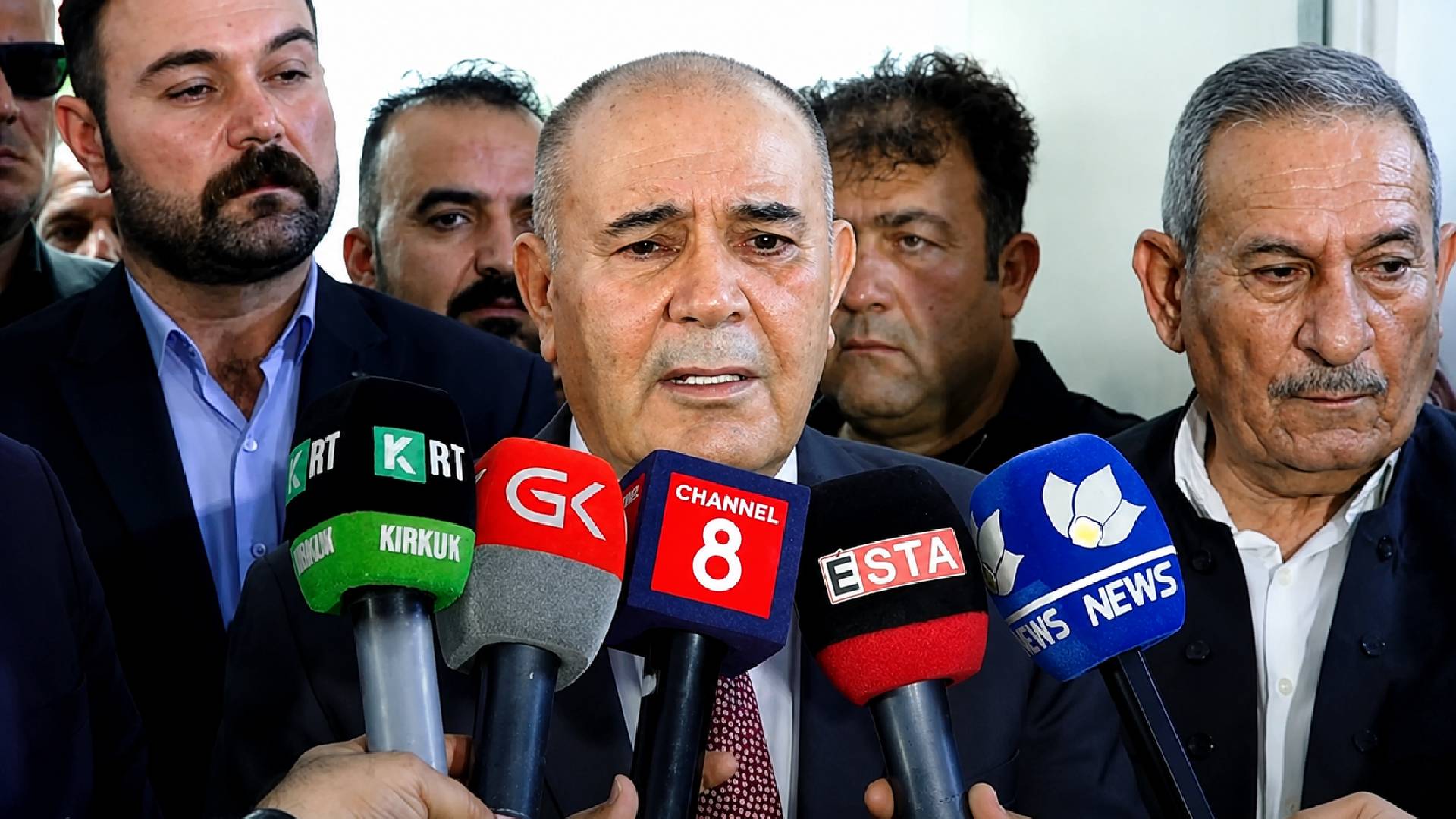
Pire: Inclusive KRG Cannot Be Formed Without the PUK
04:52 PM - 2026-07-25
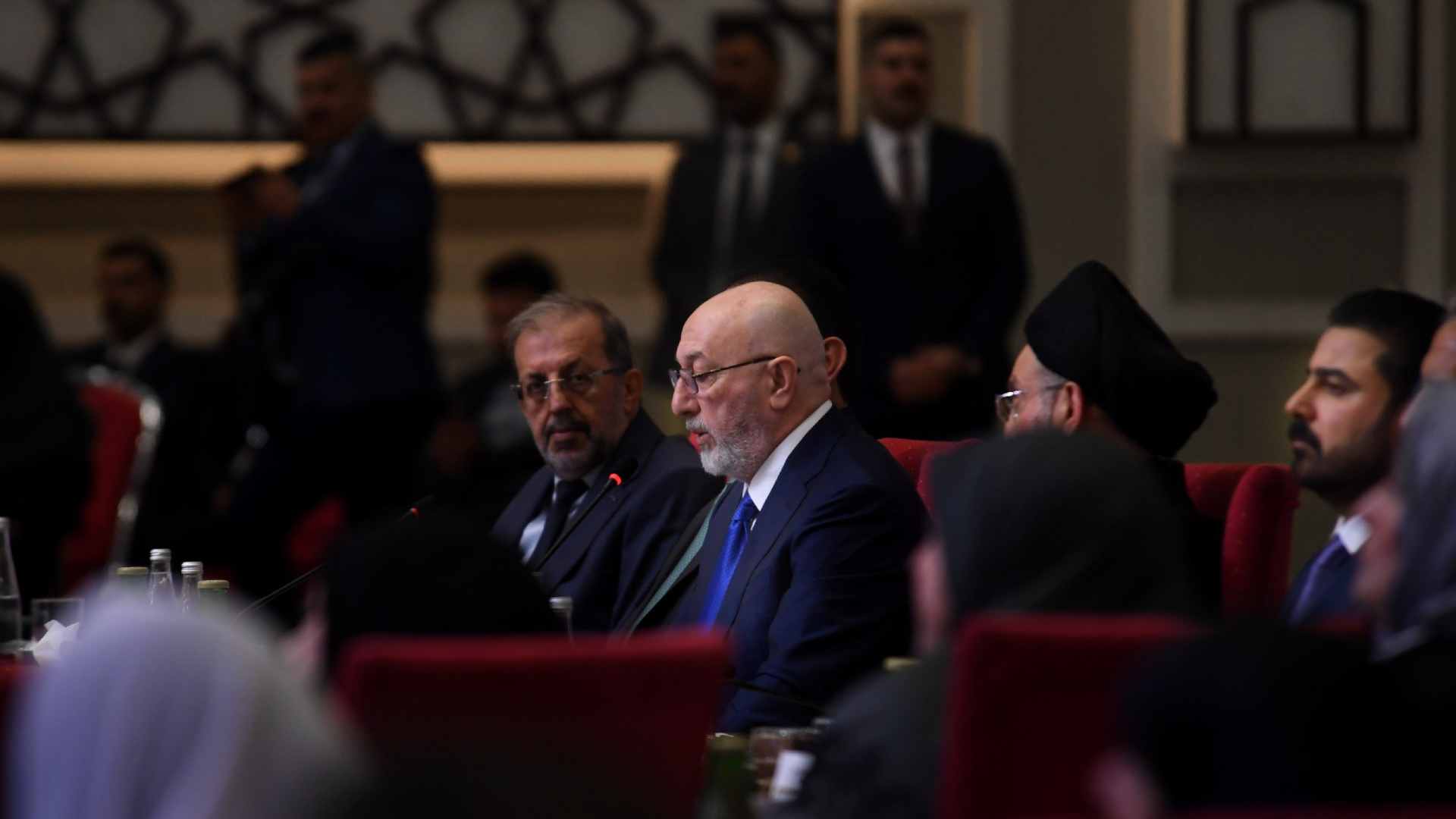
Iraqi President Urges Inclusion of Women in Top Cabinet Roles
12:36 PM - 2026-07-25
.jpg)
UN Secretary-General Arrives in Syria in First Visit Since Before Civil War
09:40 AM - 2026-07-25
U.S. President Rules Out Saudi Civil Nuclear Deal Without Israel Normalisation
09:20 AM - 2026-07-25
Most read
-
UN Secretary-General Arrives in Syria in First Visit Since Before Civil War
World 09:40 AM - 2026-07-25 -
Romanian F-16s Down Second Drone Near Ukraine Border
World 01:33 PM - 2026-07-25 -
Zelenskiy Says U.S. and Ukraine Advancing Joint Drone Production
World 10:15 AM - 2026-07-25 -
Italy's Defence Minister Offers Adviser Post to Ousted Ukrainian Counterpart
World 10:53 AM - 2026-07-25 -
Pire: Inclusive KRG Cannot Be Formed Without the PUK
P.U.K 04:52 PM - 2026-07-25 -
At Least 35 Killed After Two Buses Collide in Central Syria
World 05:00 PM - 2026-07-25 -
Iraqi President Urges Inclusion of Women in Top Cabinet Roles
Iraq 12:36 PM - 2026-07-25 -
Iraq Seeks Alternative Export Routes as Strait of Hormuz Crisis Continues
Iraq 07:58 PM - 2026-07-25
The News in your pocket
Download
 Application