

Iraq Enters New Era of Renewal with Rise of Younger Leaders
Iraq 03:42 PM - 2026-04-28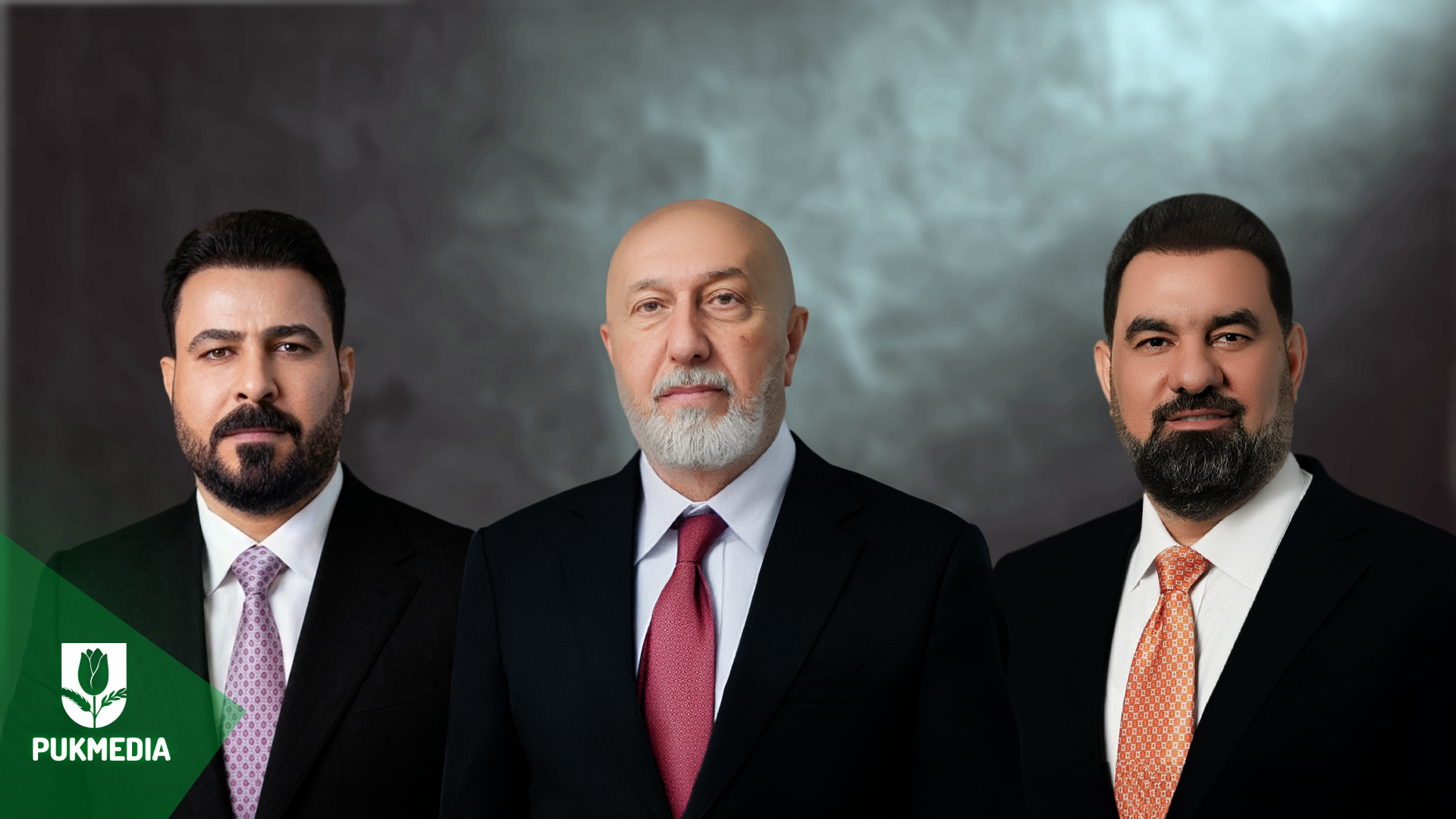 PUKMEDIA
Speaker of the Iraqi parliament, President, and Prime Minister of Iraq.
Twenty-three years after the United States-led liberation of Iraq, the country is entering what many describe as a new phase of renewal and rejuvenation, with growing expectations that the next four years will focus on public services, reform, and resolving long-standing challenges. This optimism is partly driven by the fact that many key political positions are now expected to be held by younger figures, which has created considerable hope among the Iraqi people.
Change of Power Has Become a Tradition
Iraq’s political system has increasingly embraced peaceful transfers of power since 2003, with leadership positions regularly changing hands through constitutional and parliamentary processes.
Since 2003, Iraq’s political system has witnessed regular institutional turnover across its key state positions. Eight individuals have served as Prime Minister, six figures have held the office of President, and six individuals have served as Speaker of Parliament. This pattern reflects the country’s evolving political system and the regularity of leadership change through constitutional and parliamentary mechanisms.
Youngest Figure to Lead Government Formation
The latest example came on Monday night, when the Coordination Framework, the largest bloc in the Iraqi parliament, nominated Ali al-Zaidi, aged 40, to form the next federal government.
His nomination followed consultations among alliance leaders, who concluded that al-Zaidi meets the requirements of the current stage and could respond to Iraq’s present needs.
Eight Figures Have Held the Position of Prime Minister
Since 2004, eight individuals have been tasked with leading Iraqi governments, including Ayad Allawi, Ibrahim al-Jaafari, Nouri al-Maliki, Haider al-Abadi, Adel Abdul Mahdi, Mustafa al-Kadhimi, and Mohammed Shia' al-Sudani. Al-Zaidi is now the latest nominee to form a cabinet.
Two previous nominees, Mohammed Tawfiq Allawi and Adnan al-Zurfi, were unable to form governments in 2020.
Six Figures Have Served as President
At the same time, Iraq has also witnessed several changes in the presidency, with leaders including Ghazi al-Yawar, Jalal Talabani, Fuad Masum, Barham Salih, Abdullatif Rashid, and Nizar Amedi serving in the role.
One of the defining features of the current period is the rise of younger leaders to senior office. President Nizar Amedi, Speaker Haibat al-Halbousi, and Prime Minister-designate Ali al-Zaidi all represent a younger generation of Iraqi leadership.
Six Individuals Have Served as Speaker of the Iraqi Parliament
Haibat al-Halbousi is the sixth Speaker of the Iraqi parliament, following Mahmoud al-Mashhadani, Ayad al-Samarrai, Osama al-Nujaifi, Salim al-Jabbouri, and Mohammed al-Halbousi in previous terms.
A Trend Toward Younger Political Leadership in Iraq
One of the notable features of Iraq’s political landscape, especially in the current cycle, is a trend toward younger figures increasingly taking leadership roles. For example, President Nizar Amedi, born in 1968, is 58 years old and is currently among the experienced generation of political leaders. Meanwhile, Haibat al-Halbousi, the current Speaker of parliament, was born in 1980 and is 46 years old. Similarly, Ali al-Zaidi, who has been tasked with forming the new government, was born in 1986 and is 40 years old.
This trend is seen as a sign that a new generation of leaders may contribute to renewed stability and improved governance in the country.
Youth Participation in Iraq’s Senior Positions as an Indicator of State Vitality
Political analyst Faiq Yazidi told PUKMEDIA that appointing and nominating young people for Iraq’s sovereign positions is a sign of a vibrant and dynamic state. He noted that major global changes are often driven by youth, and from this perspective, Iraq is expected over the next four years to take significant steps toward economic reform, improving citizens’ livelihoods, and enhancing public services.
He added that in the coming term, out of the four key sovereign positions, three will be held by young, capable, and experienced figures. This, he said, highlights Iraq’s democratic development compared with neighboring countries and increases expectations for further progress.
Yazidi also pointed out that although Iraq is characterized by diverse ethnicities, sects, and religions, it has experienced more political turnover than many countries in the region, including even the Kurdistan Region. He noted that apart from Nouri al-Maliki, no prime minister has served more than one term. According to him, this political rotation has benefited Iraq by improving governance, enhancing public services, and promoting merit-based leadership, ultimately pushing the country further along the path of democracy.
PUKMEDIA Exclusive
More news
-
Kazakh President Calls for Freeze of Ukraine War
10:35 PM - 2026-07-25 -
Iraq Seeks Alternative Export Routes as Strait of Hormuz Crisis Continues
07:58 PM - 2026-07-25 -
Indian Education Minister Quits Following Youth-Led Protests
05:46 PM - 2026-07-25 -
At Least 35 Killed After Two Buses Collide in Central Syria
05:00 PM - 2026-07-25
see more
.jpg)
World 10:40 PM - 2026-07-25 Iran Says Ukrainian Strike on Commercial Vessel in Caspian Sea Kills Sailor
Pire: Inclusive KRG Cannot Be Formed Without the PUK
04:52 PM - 2026-07-25
Iraqi President Urges Inclusion of Women in Top Cabinet Roles
12:36 PM - 2026-07-25
.jpg)
UN Secretary-General Arrives in Syria in First Visit Since Before Civil War
09:40 AM - 2026-07-25
U.S. President Rules Out Saudi Civil Nuclear Deal Without Israel Normalisation
09:20 AM - 2026-07-25
Most read
-
UN Secretary-General Arrives in Syria in First Visit Since Before Civil War
World 09:40 AM - 2026-07-25 -
Romanian F-16s Down Second Drone Near Ukraine Border
World 01:33 PM - 2026-07-25 -
Zelenskiy Says U.S. and Ukraine Advancing Joint Drone Production
World 10:15 AM - 2026-07-25 -
Italy's Defence Minister Offers Adviser Post to Ousted Ukrainian Counterpart
World 10:53 AM - 2026-07-25 -
Pire: Inclusive KRG Cannot Be Formed Without the PUK
P.U.K 04:52 PM - 2026-07-25 -
At Least 35 Killed After Two Buses Collide in Central Syria
World 05:00 PM - 2026-07-25 -
Iraqi President Urges Inclusion of Women in Top Cabinet Roles
Iraq 12:36 PM - 2026-07-25 -
Iraq Seeks Alternative Export Routes as Strait of Hormuz Crisis Continues
Iraq 07:58 PM - 2026-07-25
The News in your pocket
Download
 Application