

PUK: More Than Half a Century of Glory, Sacrifice, and Renewal
Opinions 10:18 AM - 2026-06-02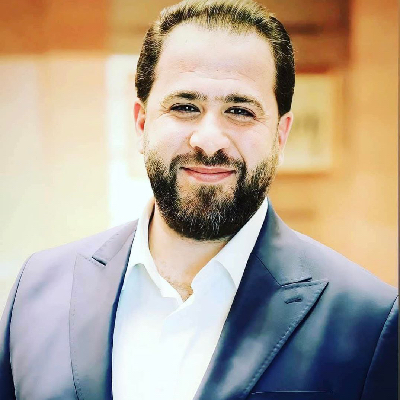
Chenar Sharei
Written by Chenar Sharei
Dear beloved citizens, proud families of the martyrs, and fighters on the path of freedom,
Today is not merely the commemoration of the founding of a political party; rather, it is the remembrance of the awakening of a nation and the rekindling of the spark of a revolution that restored hope to a people during one of the darkest moments of despair. Fifty-one years ago, amid defeat and under the threat of erasing Kurdish identity, the Patriotic Union of Kurdistan (PUK) emerged as a historical necessity under the leadership of the late President Mam Jalal and his comrades on June 1, 1975.
In the history of nations, there are movements and organizations that become more than political parties. They become living history, the voice of a people, the hope of generations, and the symbol of struggle and sacrifice. The PUK is one of those movements that, throughout the past 51 years, between mountains and cities, between war and peace, between suffering and victory, has recorded a history filled with struggle and sacrifice.
On the occasion of the 51st anniversary of this organization’s founding, we must not only speak about the history of its establishment, but also about the thousands of sacrifices and martyrs whose blood colored the flag of Kurdistan and paved the road to freedom.
In 1975, following the collapse of the September Revolution and the political and national crisis that struck the Kurdish people, a profound sense of national responsibility arose among a number of Peshmerga fighters, intellectuals, and revolutionaries. At that historic moment, Jalal Talabani and his comrades decided to create a new voice for Kurdistan—a voice not only of armed resistance, but also of thought, democracy, alliance, and life itself.
The PUK was founded at a highly sensitive time, when many believed, the Kurdish revolution had come to an end. But the PUK came to declare:
“Kurdistan will never end.”
From its earliest days, the organization carried a message of reform, renewal, and social liberation. That is why it quickly became a mass movement deeply rooted in the hearts of the people.
Throughout these 51 years, the PUK was not merely a political party; it became a national school—a school for Peshmerga fighters, intellectuals, students, women activists, and all those who dreamed of freedom.
If today we speak of the achievements of the Kurdistan Region, the name and role of the PUK cannot be erased from that history. From the armed struggle against the Ba’ath dictatorship, to the 1991 uprising, to the establishment of parliament and the Kurdistan Regional Government, to protecting the federal experience and building state institutions, the PUK has been a central force in every stage.
What distinguished the PUK was not only armed struggle, but also its belief in dialogue, partnership, coexistence, and peaceful solutions.
Jalal Talabani, with all his charisma and experience, succeeded in creating a new image of the Kurds in Iraq and across the world: the image of a man of dialogue, a national leader, and a man of peace.
Throughout its struggle, the PUK sacrificed thousands of martyrs:
* The martyrs of the mountains,
* The martyrs of the prisons,
* The martyrs of Anfal and chemical attacks,
* The martyrs of the war against terrorism,
* And all those unknown heroes whose names were never recorded, yet whose blood laid the foundation for today’s Kurdistan.
No words can truly measure the scale of those sacrifices.
The mothers of martyrs, fatherless children, waiting wives, and the Peshmerga of the mountains—all are part of the sacred history of the PUK.
At the same time, this party managed to achieve major political and diplomatic successes.
Yet the history of the PUK has not been only a history of victories; it has also been a history of challenges and crises. Internally and externally, it has faced many conflicts and pressures. But what matters most is that it has never abandoned its principles: serving the people, protecting Kurdistan, and continuing the national struggle.
Today, after 51 years, the PUK stands before a new phase—a phase of renewal, youth empowerment, technology, economic and political transformation, and preserving internal unity. If the party seeks to grow stronger, it must continue listening to the voices of the youth, renewing its institutions, and strengthening the people’s trust.
Despite all challenges and crises, the name of the PUK still symbolizes struggle and loyalty for many people. It remains a symbol of those days when Peshmerga fighters, with empty hands but hearts full of faith, defended the land and dignity of their people.
On the 51st anniversary of the founding of the Patriotic Union of Kurdistan, we bow our heads in respect to:
All martyrs, all Peshmerga fighters, all activists and freedom fighters, and all the families who paid the price for the peace and freedom of this land.
Fifty-one years is not just a number; it is a history full of pain and hope.
A history of a road protected by blood.
A history of belief in Kurdistan.
And no matter how times and stages may change, one truth will always remain:
A party nourished by the blood of martyrs will never die in the hearts and minds of the people.
From the very beginning, the PUK was the party of “impossibilities.” At a time when enemies believed the Kurdish cause had ended, the PUK reignited a new revolution under the slogan: “We will bow our heads to no one.”
This party was not only a political organization; it was a school that trained thousands of Peshmerga fighters and activists who turned the mountains of Kurdistan into an unconquerable fortress against occupiers.
When speaking of the PUK, we cannot forget that “golden crown” upon the chest of the nation—the martyrs. The PUK is the party of suffering, sacrifice, and martyr leaders. From Khalkhalan to Garmian, from Badinan to Qandil, the bright blood of the PUK’s sons has mixed with the soil of this homeland. Chemical bombardments and Anfal campaigns could not weaken this movement, because its roots were planted deep within the hearts of the people.
The beauty that the PUK offered to the Kurdish people was not limited to armed struggle, but also extended to thought and diplomacy:
* The PUK was among the first Kurdish political forces to introduce the concepts of democracy and human rights into Kurdish political life and to create space for freedom of opinion and criticism.
* It was one of the principal architects of the great 1991 uprising that shattered the occupier’s dominance and liberated Kurdistan.
* After the uprising, the PUK became one of the foundational pillars in establishing the Kurdistan Parliament and Government and consistently defended the constitutional entity of the Kurdistan Region.
* Through the wisdom of Mam Jalal, the Kurds became a central actor in the new Iraq, and for the first time in history, a Kurd became President of Iraq—a peak diplomatic achievement.
Today, on its 51st anniversary, the PUK continues forward with the same spirit of renewal. It is a party of women, youth, and intellectuals; a party striving to preserve balance and stability. More than ever, Kurdistan needs the PUK to help correct the course of governance and ensure equal services reach every household.
On this sacred occasion, we bow in reverence before the pure souls of the martyrs of Kurdistan’s liberation path, and above all, our great leader, Mam Jalal.
We renew our pledge that the PUK shall remain the high fortress of Kurdish identity and always stand on the frontlines defending the legitimate rights of the Kurdish people.
Congratulations on the 51st anniversary of the proud and honorable life of the Patriotic Union of Kurdistan.
Long live Kurdistan.
Long live the Kurdish people.
More news
-
Kazakh President Calls for Freeze of Ukraine War
10:35 PM - 2026-07-25 -
Iraq Seeks Alternative Export Routes as Strait of Hormuz Crisis Continues
07:58 PM - 2026-07-25 -
Indian Education Minister Quits Following Youth-Led Protests
05:46 PM - 2026-07-25 -
At Least 35 Killed After Two Buses Collide in Central Syria
05:00 PM - 2026-07-25
Most read
-
UN Secretary-General Arrives in Syria in First Visit Since Before Civil War
World 09:40 AM - 2026-07-25 -
Romanian F-16s Down Second Drone Near Ukraine Border
World 01:33 PM - 2026-07-25 -
Pire: Inclusive KRG Cannot Be Formed Without the PUK
P.U.K 04:52 PM - 2026-07-25 -
Zelenskiy Says U.S. and Ukraine Advancing Joint Drone Production
World 10:15 AM - 2026-07-25 -
Italy's Defence Minister Offers Adviser Post to Ousted Ukrainian Counterpart
World 10:53 AM - 2026-07-25 -
At Least 35 Killed After Two Buses Collide in Central Syria
World 05:00 PM - 2026-07-25 -
Iraqi President Urges Inclusion of Women in Top Cabinet Roles
Iraq 12:36 PM - 2026-07-25 -
Iraq Seeks Alternative Export Routes as Strait of Hormuz Crisis Continues
Iraq 07:58 PM - 2026-07-25
The News in your pocket
Download
 Application