

Presidency of the Republic and the Restoration of Institutional Balance
Opinions 02:04 PM - 2026-04-27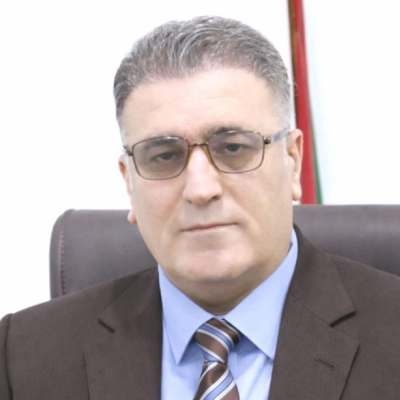
Dr Adalat Abdullah
Written by Dr Adalat Abdullah, Researcher at Academic Centre for National Studies (ACNS).
Translated by Narmeen Othman Mohammad
For years, we have been reminding Iraq's influential leaders
and politicians of the necessity to review the status of the Presidency of the
Republic. It is essential to grant this institution broader powers, enabling it
to play a more effective role within the Iraqi equation, rectify the course of
the political process, and unify the nation’s energies and capabilities. This
institution could demonstrate greater proficiency if empowered with enhanced
sovereign executive capacities, allowing it to participate in curbing domestic
crises and tensions, and resolving complex dossiers.
We have repeatedly emphasised that viewing the Presidency as
a secondary institution—while centralising the vast majority of state powers
within the executive and legislative branches (the Council of
Representatives)—serves only to keep the arena of domestic conflict and
political strife wide open. Consequently, crucial issues are settled within the
framework of fragile alliances and polarisations that do not aim to protect the
country's supreme interests; rather, they represent attempts to impose partisan
and sectarian wills, which have historically been—and remain—a primary source
of internal division and tension in relations between political forces.
Undoubtedly, the Presidency is set to undergo a series of
new changes at both structural and programmatic levels. We believe that the
President’s experience, coupled with his background in high-level and sensitive
roles at the Al-Salam Palace and his collaboration with former presidents
during the post-regime era, grants him the ability to formulate a distinct
vision for managing the Presidency and further activating its role in both
domestic and international affairs.
In light of the presence of two Vice Presidents and the
necessity of modernising the advisory board—or relying on political and
scientific experts alongside coordination with other state institutions—it is
anticipated that this national sovereign institution will adopt a newer
standard.
This aligns with the requirements of the current stage and
the stipulations of the permanent Iraqi Constitution, fulfilling a more
effective and expected role. In this regard, Iraq certainly requires a
transition towards a genuine institutional state; a state committed to the
provisions of the Constitution as a fundamental reference for formulating laws,
decisions, positions, and initiatives that possess legitimacy and executive
force. Furthermore, this institution, and His Excellency the President himself,
require a renewal of perspectives and capabilities.
This involves a series of initiatives to strengthen the
anticipated role as we move towards a new phase where institutional balance in
the administration of the Iraqi state is restored. Therefore, we hope that this
trajectory meets the expectations of the Iraqi people and that we witness a
more supreme and influential role for the Presidency of the Republic.
More news
-
Kazakh President Calls for Freeze of Ukraine War
10:35 PM - 2026-07-25 -
Iraq Seeks Alternative Export Routes as Strait of Hormuz Crisis Continues
07:58 PM - 2026-07-25 -
Indian Education Minister Quits Following Youth-Led Protests
05:46 PM - 2026-07-25 -
At Least 35 Killed After Two Buses Collide in Central Syria
05:00 PM - 2026-07-25
Most read
-
UN Secretary-General Arrives in Syria in First Visit Since Before Civil War
World 09:40 AM - 2026-07-25 -
Romanian F-16s Down Second Drone Near Ukraine Border
World 01:33 PM - 2026-07-25 -
Pire: Inclusive KRG Cannot Be Formed Without the PUK
P.U.K 04:52 PM - 2026-07-25 -
Zelenskiy Says U.S. and Ukraine Advancing Joint Drone Production
World 10:15 AM - 2026-07-25 -
Italy's Defence Minister Offers Adviser Post to Ousted Ukrainian Counterpart
World 10:53 AM - 2026-07-25 -
At Least 35 Killed After Two Buses Collide in Central Syria
World 05:00 PM - 2026-07-25 -
Iraqi President Urges Inclusion of Women in Top Cabinet Roles
Iraq 12:36 PM - 2026-07-25 -
Iraq Seeks Alternative Export Routes as Strait of Hormuz Crisis Continues
Iraq 07:58 PM - 2026-07-25
The News in your pocket
Download
 Application