

How Did the PUK Find the Turkmen “Key” While the KDP Remained in the Corner of Defeat?
Opinions 03:16 PM - 2026-04-20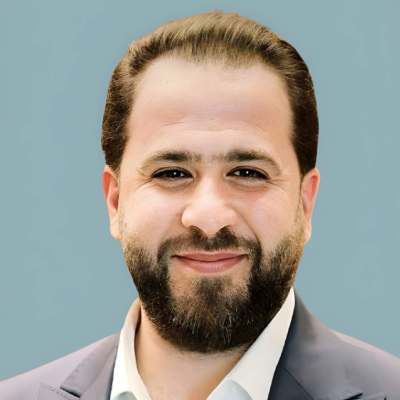
Chenar Sharei
Written by Journalist Chenar Sharei
The agreement following the Kirkuk Provincial Council
elections and the change in the governor’s position was not merely an
administrative adjustment; it represented a strategic shift in the political
landscape of the disputed territories. Here, we present a detailed and
comprehensive analysis of the political wisdom pursued by the Patriotic Union
of Kurdistan (PUK) and the deep challenges that have constrained the Kurdistan
Democratic Party (KDP):
1. The PUK’s Wisdom: A Strategy of Patience and Realism
The PUK succeeded in managing a complex political game,
achieving multiple objectives simultaneously:
- Ending the Acting Phase: The PUK understood that Kirkuk
remaining under an acting governor for seven years had significantly weakened
the Kurdish position. Its strategy lay in making a “tactical compromise” to
secure a “strategic gain”—regaining the post even through temporary
partnership.
- The PUK did not rush; it allowed time to exhaust other
actors until they reached the conclusion that no local government could be
formed without the PUK (as the leading winner).
- Restoring Legitimacy to Kirkuk: The return of a Kurdish
governor symbolises a powerful step toward restoring the Kurdish identity of
the city through legal and constitutional means.
2. The Turkmen “Key”: From Rivalry to Partnership
One of the most critical elements of this move was
strengthening relations with the Turkmen component. The PUK realised that:
- Bypassing Türkiye’s Veto: Turkmen groups serve as a bridge
to Ankara. Strengthening ties with them sent an indirect message to Türkiye:
“We are a factor of stability, not a threat.”
- Balancing Power: By attracting segments of Turkmen and
moderate Arab actors, the PUK managed to politically isolate the KDP and more
hardline Arab factions, freeing Kirkuk from political deadlock.
3. The KDP and Political Loss: The “All or Nothing”
Dilemma
The KDP in Kirkuk faced what can be described as a “choice
trap,” which can be analysed as follows:
- Misreading the Field: The KDP believed it could
marginalise the PUK through alliances with Arab actors and some Turkmen groups.
However, it became clear that the PUK’s popular base in Kirkuk is a major
obstacle.
- The KDP anticipated the Baghdad meeting would fail, but
when a government was formed, it found itself outside the equation. This
shifted its position from a “decision-maker” to a “dissenter.”
- Loss of Position: For the first time since 2003, the KDP
failed to act as a decisive force in Kirkuk, leading its base to feel
increasingly marginalised.
4. Long-Term Implications
This transformation and agreement will have deep future
consequences:
- The Political Map of the Kurdistan Region: The PUK’s
success in Kirkuk has boosted its confidence ahead of the Kurdistan Parliament
elections. It now speaks to Erbil with the “language of Kirkuk.”
- Relations with Baghdad: The agreement occurred under the
supervision and support of Prime Minister Mohammed Shia’ al-Sudani, portraying
the PUK as a trusted partner of Baghdad.
- Kirkuk as a Testing Ground: If the PUK succeeds in
governing alongside Turkmen and Arabs, it may establish a new governance
model—shifting from sectarian consensus to a service-oriented consensus.
The PUK turned “political realism” into a bridge back to
power, while the KDP failed to balance between “national principles” and “party
interests,” effectively leaving the field open. Kirkuk has now entered a phase
of “governance testing” after concluding the phase of “struggle over
positions.”
Kirkuk has historically been a uniquely sensitive political
and ethnic region, governed by a balance among its diverse components. This
characteristic means that any shift in power carries wide implications—not only
locally, but also regionally.
First: Returning to the Game of Political Balance
After the events of 16 October, the Kurdish position in
Kirkuk changed significantly. Local Kurdish authority diminished while
Baghdad’s role increased.
In this context, the PUK’s new agreement represents an
attempt to restore political influence and reaffirm Kurdish capacity to
participate effectively in governing the city.
Second: The Governor Position as Both Tactic and Strategy
Although the change in the governor’s post may appear
administrative, it carries strategic meaning. On one hand, it aims to reduce
tensions and create a cooperative environment; on the other, it seeks to build
new alliances and break political monopoly. This aligns with the concept of
“power-sharing to preserve balance.”
Third: Strengthening Relations with the Turkmen
The Turkmen, as a core component of Kirkuk, play a decisive
role in shaping its political direction. The PUK’s rapprochement with them
reflects a smart strategy to create internal balance and reduce tensions. It
may also limit external interference, particularly given the Turkmen’s close
ties to Türkiye.
Fourth: The KDP’s Position and Loss of Balance
In contrast, the KDP has faced a weakened position in
Kirkuk. The absence of effective alliances and internal Kurdish divisions have
prevented it from playing a significant role. This clearly shows that politics
is not sustained by power alone—it requires partnership and diplomacy.
Fifth: Future Implications
If this agreement continues in the long term, it could
significantly shape Kirkuk’s future:
- Political balance may stabilise, reducing tensions.
- However, if internal disputes remain unresolved, the risk
of further fragmentation persists.
The PUK’s agreement in Kirkuk should not be viewed merely as
a tactical victory; it is part of a broader process of restructuring political
balance. It demonstrates that in politics, success often stems from the ability
to build partnerships and engage in dialogue—not merely from unilateral
dominance.
Kirkuk remains a testing ground for balance politics. If
political actors can sustain these agreements collaboratively, a more stable
and balanced future for the province may emerge.
More news
-
Kazakh President Calls for Freeze of Ukraine War
10:35 PM - 2026-07-25 -
Iraq Seeks Alternative Export Routes as Strait of Hormuz Crisis Continues
07:58 PM - 2026-07-25 -
Indian Education Minister Quits Following Youth-Led Protests
05:46 PM - 2026-07-25 -
At Least 35 Killed After Two Buses Collide in Central Syria
05:00 PM - 2026-07-25
Most read
-
UN Secretary-General Arrives in Syria in First Visit Since Before Civil War
World 09:40 AM - 2026-07-25 -
Romanian F-16s Down Second Drone Near Ukraine Border
World 01:33 PM - 2026-07-25 -
Pire: Inclusive KRG Cannot Be Formed Without the PUK
P.U.K 04:52 PM - 2026-07-25 -
Zelenskiy Says U.S. and Ukraine Advancing Joint Drone Production
World 10:15 AM - 2026-07-25 -
Italy's Defence Minister Offers Adviser Post to Ousted Ukrainian Counterpart
World 10:53 AM - 2026-07-25 -
At Least 35 Killed After Two Buses Collide in Central Syria
World 05:00 PM - 2026-07-25 -
Iraqi President Urges Inclusion of Women in Top Cabinet Roles
Iraq 12:36 PM - 2026-07-25 -
Iraq Seeks Alternative Export Routes as Strait of Hormuz Crisis Continues
Iraq 07:58 PM - 2026-07-25
The News in your pocket
Download
 Application