

Nizar Amedi as President: Carrying Forward Mam Jalal’s Legacy
Opinions 05:13 PM - 2026-04-11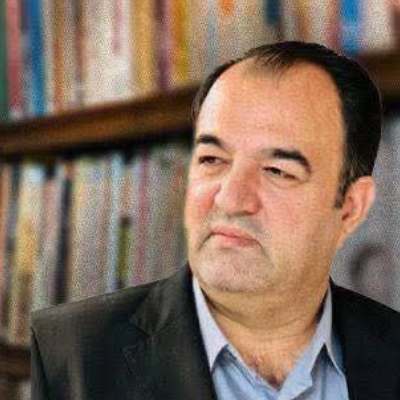
Mohammed Sheikh Othman
Written by Journalist Mohammed Sheikh Othman
On Saturday, 11 April 2026, Iraq elected Nizar Mohammed Saeed (Nizar Amedi) as President of the Republic at a pivotal political moment. This step carries significance beyond its constitutional dimension, reflecting an effort to preserve the principle of national balance and to sustain the consensus-driven approach that has, in previous phases, underpinned the political process.
This election cannot be viewed in isolation from the political legacy of the school of thought established by President Mam Jalal, which shaped the model of a unifying head of state — one capable of bridging divides and prioritising dialogue over confrontation. Amedi’s connection to this legacy extends beyond organisational affiliation with the Patriotic Union of Kurdistan (PUK); it is rooted in a close and trusted relationship with the late president. This association grants him both political credibility and moral standing within Iraq’s public consciousness. Mam Jalal’s approach was not merely partisan, but a broader methodology of governance grounded in consensus, moderation and openness to all components of Iraqi society.
This connection is likely to resonate positively with a wide segment of Iraqis, particularly those who regard Mam Jalal’s presidency as a model of inclusive leadership. The selection of a figure shaped within this political tradition opens the possibility of renewing that unifying role at a time of considerable complexity.
Amedi’s appointment comes at a moment that demands both experience and a nuanced understanding of Iraq’s political landscape. He is no newcomer to state institutions, having spent more than two decades at the heart of government. His service as an adviser to three presidents — Mam Jalal, Dr Fuad Masoum and Dr Barham Salih — provided him with direct insight into decision-making processes, crisis management and the building of political consensus.
This accumulated experience equips the new president to address pressing challenges, foremost among them rebuilding trust between political actors and managing tensions between Baghdad and Erbil — long-standing issues that test the effectiveness of the presidency of the republic. His background, combining affiliation with the PUK and practical experience within federal institutions, positions him as a mediator acceptable to multiple parties.
At the international level, Amedi’s election signals Iraq’s intention to strengthen its engagement on global issues, particularly in the fields of environmental policy and sustainable development. His tenure as Minister of Environment and participation in major international forums provide him with a broader perspective in representing Iraq abroad and aligning national priorities with global developments.
The PUK and the Presidency: Merit Beyond Quotas
Amedi’s election also reflects the PUK’s accumulated experience in managing this sovereign office. From the election of President Mam Jalal — the first non-Arab president of modern Iraq, chosen through a democratic process — to Dr Abdullatif Rashid, the PUK has sought to establish a tradition of presenting national figures for the presidency, rather than narrowly defined party candidates.
This trajectory underscores that the presidency is not merely ceremonial, as sometimes claimed, but a central pillar of the political system, with a constitutional role in maintaining balance, safeguarding the constitution and contributing to the management of national crises. Alongside the executive, legislative and judicial branches, it forms one of the cornerstones of the modern Iraqi state.
Over the past two decades, the PUK has put forward distinct models of presidential leadership, each leaving a lasting imprint:
- Jalal Talabani: Architect of broad national consensus, who redefined the presidency as a platform for dialogue.
- Dr Fuad Masoum: A voice of restraint and wisdom during times of crisis.
- Dr Barham Salih: A guardian of the constitution and an active presence on the international stage.
- Dr Abdullatif Rashid: A figure of composure who helped restore balance to the state's discourse.
This record suggests that the PUK has approached the presidency not as a matter of quota or share, but as a national responsibility requiring experience, moderation and the capacity to represent Iraq in all its diversity. In this context, Amedi’s election appears as a continuation of this approach — not a narrow partisan choice, but the latest in a line of presidents embodying the concept of a unified state.
The central question has never been who holds the office, but who is capable of preserving the balance of the state.
The significance of this approach lies in its transformation of the presidency from a largely symbolic role into an active and stabilising force within the political system. This helps explain why the position has remained associated with the PUK — not on the basis of entitlement, but of demonstrated political competence and accumulated institutional experience.
Today, with the election of Nizar Amedi, Iraq enters a new phase in which the presidency continues to draw on a deep political legacy and established institutional practice.
Between the legacy of President Mam Jalal and the demands of the present, expectations are renewed that the new president will uphold a consensus-based approach — maintaining the presidency as a platform for protecting the constitution, strengthening national partnership and reinforcing stability. This represents a test not only for the individual office-holder, but for an entire political philosophy that has, over time, sought to demonstrate that state-building rests on competence and balance, rather than on quotas.
More news
-
Kazakh President Calls for Freeze of Ukraine War
10:35 PM - 2026-07-25 -
Iraq Seeks Alternative Export Routes as Strait of Hormuz Crisis Continues
07:58 PM - 2026-07-25 -
Indian Education Minister Quits Following Youth-Led Protests
05:46 PM - 2026-07-25 -
At Least 35 Killed After Two Buses Collide in Central Syria
05:00 PM - 2026-07-25
Most read
-
UN Secretary-General Arrives in Syria in First Visit Since Before Civil War
World 09:40 AM - 2026-07-25 -
Romanian F-16s Down Second Drone Near Ukraine Border
World 01:33 PM - 2026-07-25 -
Pire: Inclusive KRG Cannot Be Formed Without the PUK
P.U.K 04:52 PM - 2026-07-25 -
Zelenskiy Says U.S. and Ukraine Advancing Joint Drone Production
World 10:15 AM - 2026-07-25 -
Italy's Defence Minister Offers Adviser Post to Ousted Ukrainian Counterpart
World 10:53 AM - 2026-07-25 -
At Least 35 Killed After Two Buses Collide in Central Syria
World 05:00 PM - 2026-07-25 -
Iraqi President Urges Inclusion of Women in Top Cabinet Roles
Iraq 12:36 PM - 2026-07-25 -
Iraq Seeks Alternative Export Routes as Strait of Hormuz Crisis Continues
Iraq 07:58 PM - 2026-07-25
The News in your pocket
Download
 Application