

A Concise and Foundational Work for the Struggle of the Women’s Movement
Opinions 01:24 PM - 2026-03-31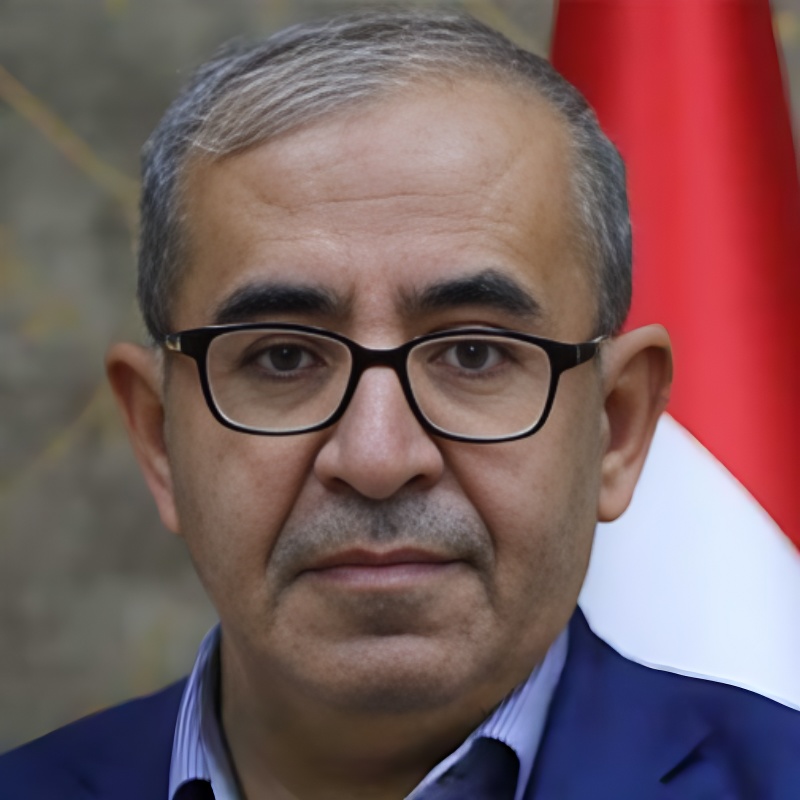
Stran Abdullah
Written by Stran Abdullah, member of the Leadership Council of the Patriotic Union of Kurdistan (PUK).
Translated by Narmeen Othman Mohammad
“A Few Pages from the History of the Iraqi Women’s Movement” is a rich and remarkable work on the trajectory of women’s multifaceted struggle in Iraq.
The book is authored by activist and participant in the women’s movement herself, Ms Zuhdiya. It is therefore a documentation, recording, and evaluation of the movement’s stages written by someone who was present in the field, participated in some phases, and played an active role in others.
Admittedly, the book highlights more prominently the role of the leftist and democratic orientation. Although, Ms Zuhdi is a member of the Communist Party and the Iraqi Women’s League. However, it is evident that the women’s movement in our country, including in Kurdistan, has largely been driven by leftist concerns and aspirations rather than being a fully integrated part of the broader national movement.
In this country, a purely liberal or democratic current has not been able to take root deeply enough to address the profound challenges facing society and the state—let alone to establish strong foundations capable of addressing women’s issues at that level.
This book has long held its place in Iraqi libraries. Last year (2025), it was translated into Kurdish by Ms Narmeen Othman in a smooth and elegant manner, as though it had originally been written in Kurdish. Notably, in order to complete the broader picture of the women’s movement in Iraq, the author refers at every stage of development to Kurdish women and their activities.
The most important stages highlighted in the book include:
• The stage of hardship for Iraqi women at the end of Ottoman rule, when the decline of the system cast a shadow of backwardness and stagnation over society, family life, and women’s conditions. This deterioration reached such an extent that the recording of women’s names in the 1904 census became a matter of social shame and controversy, provoking public discontent.
• The stage of the emergence of Iraq’s political entity following the fall of the Ottoman Empire and the British occupation, which was accompanied by the Iraqi national movement and the 1920 Revolution. During this period, women’s activism—particularly in education, literacy, and participation in public life—led to significant social tensions. National issues (the 1920 Revolution) and social reform (such as women’s education and unveiling) became intertwined. Enlightened men as well as conservative and dogmatic figures appeared alongside the growing awareness among women, shaping the course of events.
From this stage onward, the author draws a clear distinction between those who approach women’s issues independently of the national dimension and those who discuss Iraq’s political movement while marginalising the influential role of active, revolutionary women and the women’s liberation movement.
This duality became especially evident with the emergence of organisations, unions, and associations for women and other social groups, developing in parallel with the country’s political evolution along two main lines:
1. An official, sanctioned line, under the supervision of the monarchy, focusing on education, upbringing, and social advancement.
2. A national and revolutionary line, represented by opposition and nationalist forces confronting British occupation and the dependent monarchy.
• The stage of the early republican period under Abdul Karim Qasim (after the 14 July 1958 Revolution), during which women’s participation in political, economic, social, and educational spheres expanded significantly.
For the first time—not only in Iraq but in the Arab world, of which Iraq is officially a part—women assumed ministerial positions. Moreover, progressive personal status laws were introduced, significantly advancing women’s social standing—gains that later setbacks under nationalist and Ba‘ath regimes could not entirely erase.
The brief period of political openness under Qasim resembled a springtime for Iraq and its women. However, it did not last long. The Ba‘ath regime, nationalist guards, and nationalist currents came to power after the coup of 8 February 1963, ushering in a bitter reality that persisted through the dark era of Saddam Hussein’s rule. During this time, women’s conditions deteriorated into unprecedented hardship. Ms Zuhdi’s testimony in this moral tribunal of history is deeply sorrowful and painful.
In this period, three prominent lines within the women’s movement can be identified:
1. The authentic but suppressed movement, which became part of the democratic, national, and progressive opposition forces.
2. A limited and cautious development of women’s roles within internal social frameworks, detached from political dimensions.
3. A co-opted and domesticated movement, represented by the Ba‘ath regime’s General Federation of Iraqi Women, which functioned as a tool to contain and suppress any genuine, independent feminist activity.
During this time, even women’s armed struggle and participation in the Peshmerga movement, as well as their organisational and resistance roles, became part of the broader opposition to dictatorship and rejection of unjust rule.
The narrative continues up to the Fourth World Conference on Women in Beijing in 1995, where the official (and fabricated) Iraqi delegation confronted the genuine—though unofficial—delegation of Iraqi women coming from the Kurdistan Region and exile. This encounter clearly revealed the stark contrast between oppressor and victim.
Throughout this period, wars, victories, and social setbacks profoundly influenced the trajectory of the women’s movement. The book, however, does not extend to the period following the fall of the Ba‘ath regime. Nonetheless, the struggle of the author and her colleagues continued in the context of a new democratic environment and in confronting the renewed challenges posed by sectarian governance and the dominance of regressive forces in Iraq.
Thus, the book remains an open and ongoing work—both in documenting the path of women’s struggle and in writing the history of their freedom and suffering, especially through the testimonies of living participants.
Perhaps the time has come to say that, with the same methodology and level of documentation, the struggle of Kurdish women in Kurdistan, in Iraq, and in other regions also deserves to be recorded and articulated.
More news
-
Kazakh President Calls for Freeze of Ukraine War
10:35 PM - 2026-07-25 -
Iraq Seeks Alternative Export Routes as Strait of Hormuz Crisis Continues
07:58 PM - 2026-07-25 -
Indian Education Minister Quits Following Youth-Led Protests
05:46 PM - 2026-07-25 -
At Least 35 Killed After Two Buses Collide in Central Syria
05:00 PM - 2026-07-25
Most read
-
UN Secretary-General Arrives in Syria in First Visit Since Before Civil War
World 09:40 AM - 2026-07-25 -
Romanian F-16s Down Second Drone Near Ukraine Border
World 01:33 PM - 2026-07-25 -
Pire: Inclusive KRG Cannot Be Formed Without the PUK
P.U.K 04:52 PM - 2026-07-25 -
Zelenskiy Says U.S. and Ukraine Advancing Joint Drone Production
World 10:15 AM - 2026-07-25 -
Italy's Defence Minister Offers Adviser Post to Ousted Ukrainian Counterpart
World 10:53 AM - 2026-07-25 -
At Least 35 Killed After Two Buses Collide in Central Syria
World 05:00 PM - 2026-07-25 -
Iraqi President Urges Inclusion of Women in Top Cabinet Roles
Iraq 12:36 PM - 2026-07-25 -
Iraq Seeks Alternative Export Routes as Strait of Hormuz Crisis Continues
Iraq 07:58 PM - 2026-07-25
The News in your pocket
Download
 Application